
Nature facts helps us understand how plants, animals, and ecosystems work together. It also reminds us that every species plays an important role in maintaining the balance of our planet.
Nature is one of the greatest sources of mystery, beauty, and inspiration on Earth. From the smallest insects living beneath the soil to the largest animals roaming across oceans and forests, every living creature has unique abilities that help it survive.
The natural world is filled with incredible events and surprising behaviors that often seem impossible. Trees can communicate, animals can recognize each other, and tiny creatures can create complex societies. These discoveries show that nature is far more intelligent and connected than many people realize.
Scientists continue exploring forests, oceans, deserts, and other environments to discover new information about wildlife. Many creatures still remain unknown, and every discovery reveals another amazing story about life on Earth.
In this article, we will explore some of the most fascinating nature facts that reveal the incredible abilities of animals, plants, and natural systems.
What Makes Nature So Amazing?
Nature is a complex network where every organism interacts with its environment. Plants produce oxygen, animals spread seeds, insects pollinate flowers, and microorganisms help recycle nutrients.
Although humans have studied nature for centuries, countless mysteries remain. Some animals communicate in unique ways, some plants have surprising survival strategies, and some ecosystems function like perfectly organized communities.
The following nature facts demonstrate the creativity and adaptability of life.
1. Trees Can Communicate Through Underground Networks
One of the most fascinating nature facts is that trees are not as silent as they appear.
For many years, scientists believed trees existed independently from each other. However, research has shown that forests contain hidden communication systems beneath the ground.
Trees can connect through their roots with the help of fungi. This underground network is sometimes called the “Wood Wide Web.” Fungi attach themselves to tree roots and create pathways that allow trees to exchange nutrients and information.
When a tree experiences stress, such as an insect attack or environmental challenge, it can send chemical signals through this network. Nearby trees may receive these signals and increase their own defenses.
Older trees can sometimes support younger plants by sharing resources, helping the forest survive difficult conditions.
This discovery changes the way we view forests. A forest is not just a collection of individual trees; it is a connected community where plants interact with each other.

2. Dolphins Have Their Own Unique Names
Dolphins are among the most intelligent animals on Earth, and their communication abilities are truly remarkable.
One amazing nature fact is that dolphins use unique sounds that function similarly to names.
Each dolphin develops a special whistle that identifies it. Other dolphins can recognize these sounds and use them to communicate with specific individuals.
This ability helps dolphins maintain relationships within their groups. Dolphins often live in social communities where cooperation is important for finding food, protecting each other, and raising young.
Scientists believe dolphin communication demonstrates advanced intelligence because it involves recognition, memory, and social awareness.
The underwater world is full of complex animal behaviors, and dolphins show just how sophisticated marine life can be.
3. Bamboo Is One of the Fastest-Growing Plants
Plants have developed incredible survival strategies, and bamboo is a perfect example.
Bamboo is famous for its extraordinary growth speed. Some bamboo species can grow nearly a meter in a single day under the right conditions.
This rapid growth allows bamboo to quickly occupy space and compete for sunlight.
Beyond its speed, bamboo is also incredibly strong. Many cultures use bamboo for building materials, furniture, tools, and other products.
Despite being lightweight, bamboo has a strong structure that allows it to survive different environments.
This plant demonstrates how nature creates efficient designs. A simple-looking plant can have remarkable strength and adaptability.
4. Elephants Have Incredible Memories
Elephants are known for their intelligence and impressive memory.
Their ability to remember locations, individuals, and experiences plays an important role in survival.
For example, elephants can remember water sources even after long periods without visiting them. This knowledge helps them survive during dry seasons when resources are limited.
Elephants can also recognize other elephants and sometimes remember humans they have encountered before.
Their strong memory helps them maintain social relationships. Elephant groups often have close family bonds, and older elephants can guide younger members of the herd.
The intelligence of elephants shows that complex thinking and emotional connections exist throughout the animal kingdom.
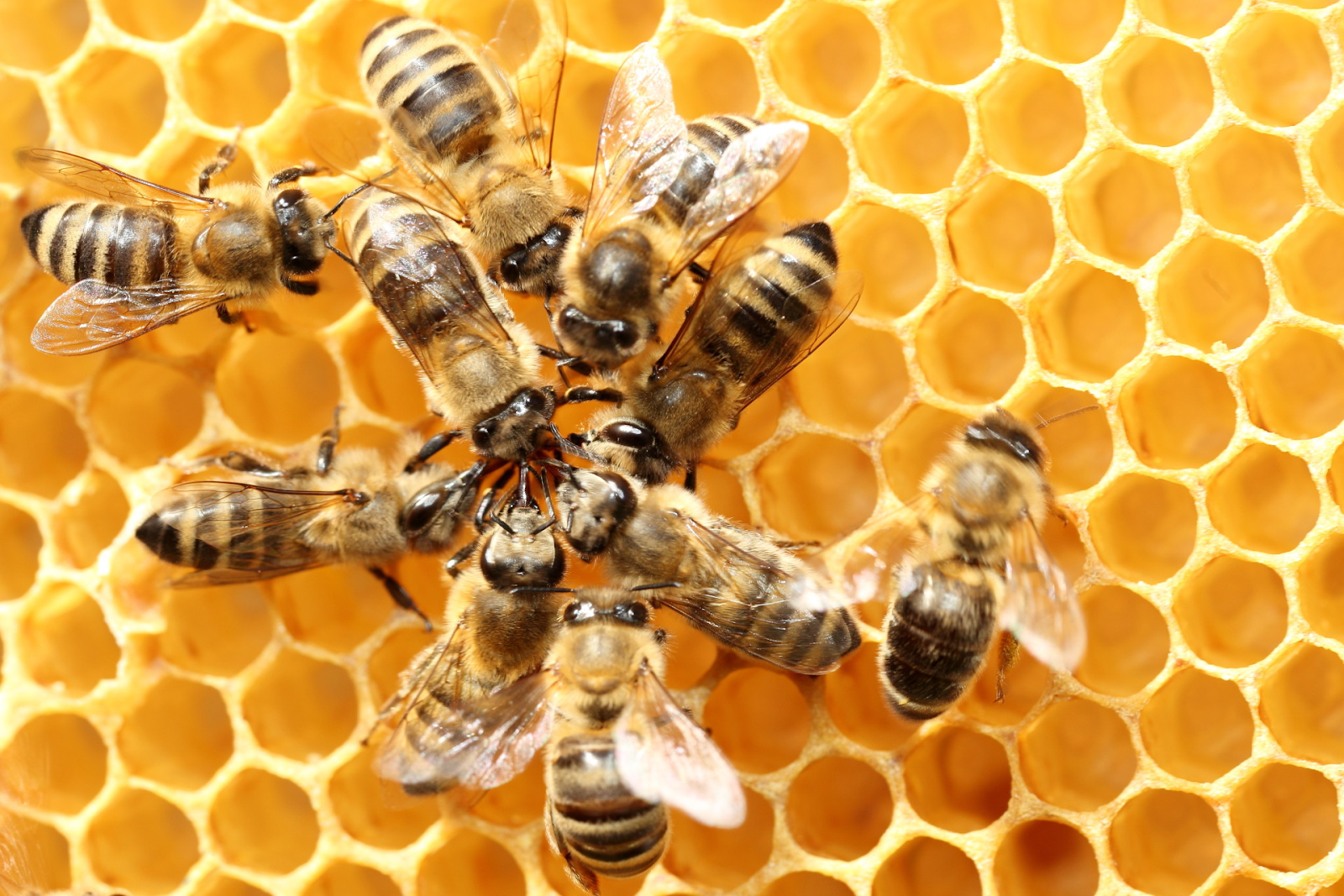
5. Bees Use Dance to Communicate
Bees may be small, but their communication system is incredibly advanced.
A famous nature fact about bees is their “waggle dance,” a special movement used to share information.
When a bee discovers a good source of food, it returns to the hive and performs a dance. The movement pattern tells other bees where the food is located.
The direction of the dance relates to the position of the food source, while the duration of the dance communicates distance.
This allows bees to work together efficiently without using spoken language.
The waggle dance is one of the clearest examples of how animals have developed unique communication methods.
6. Ant Colonies Can Outweigh Humans
Ants may be tiny, but their total impact on Earth is enormous.
There are billions or even trillions of ants across the planet. When combined, the total weight of ants may exceed the total weight of humans.
This is a surprising nature fact because individual ants seem insignificant, but together they create powerful societies.
Ant colonies are highly organized. Different ants have different roles, including collecting food, protecting the colony, and caring for young ants.
Their teamwork allows them to survive in almost every environment on Earth.
Ants remind us that size does not determine importance. Even the smallest creatures can have a huge influence on ecosystems.
7. Sloths Are Surprisingly Good Swimmers
Sloths are usually famous for moving slowly through trees, but they have another hidden ability.
One surprising nature fact is that sloths are excellent swimmers.
Although they spend most of their lives in forests, sloths can move through water effectively when necessary. Their long arms help them paddle, and they can travel faster in water than on land.
Swimming allows sloths to cross rivers, escape certain dangers, and reach new areas.
This shows that animals often have abilities that are not obvious from their appearance.
Nature frequently creates unexpected adaptations that help creatures survive.
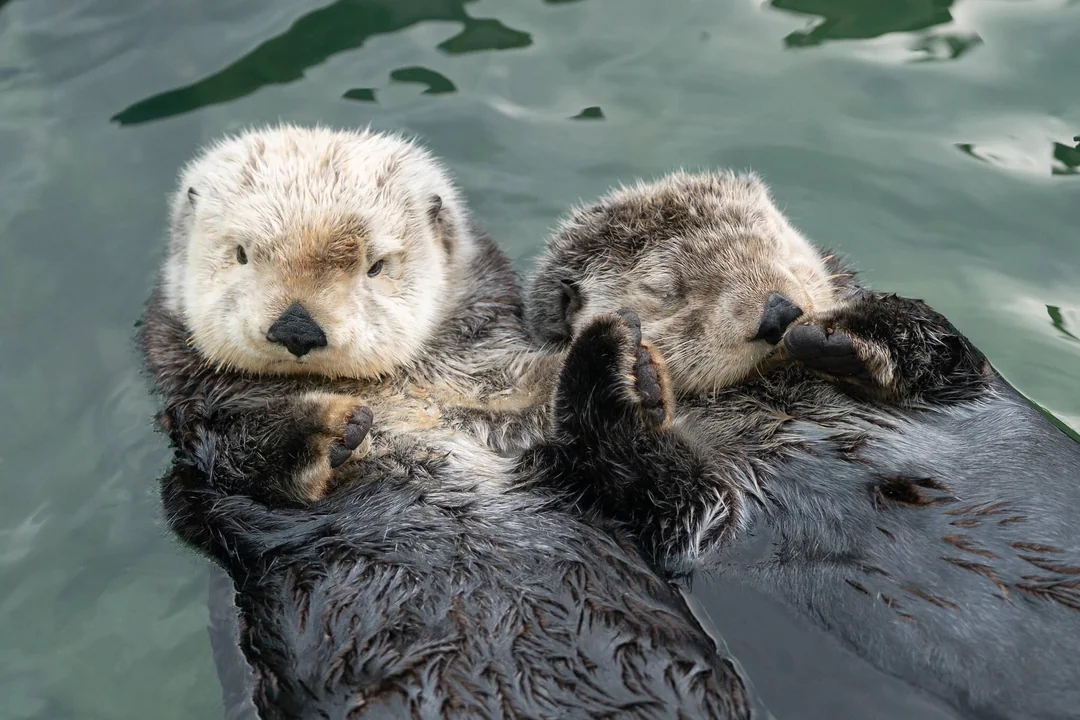
8. Sea Otters Hold Hands While Sleeping
Sea otters have developed one of the most adorable survival behaviors in the animal world.
When resting in groups, sea otters sometimes hold hands while floating in the water. This helps them stay together and avoid drifting apart.
They may also wrap themselves in kelp, a type of seaweed, to keep themselves anchored.
Sea otters are social animals that depend on cooperation and group behavior.
This simple action shows how animals develop strategies to protect themselves and maintain connections with others.
9. Penguins Use Pebbles to Choose Partners
Penguins are known for their loyalty and fascinating social behaviors.
One interesting nature fact is that some penguin species use pebbles as part of their courtship rituals.
A male penguin may search for a special pebble and present it to a female. If she accepts it, this can become part of their bonding behavior.
Penguin pairs often work together to protect and raise their young in harsh environments.
Their behavior demonstrates cooperation and partnership in the animal world.
Even in freezing environments, animals create complex relationships that help them survive.
10. Octopuses Have Three Hearts
The ocean is home to some of the most unusual creatures on Earth, including the octopus.
One of the most amazing nature facts is that octopuses have three hearts.
Two hearts pump blood toward the gills, while the third sends blood throughout the rest of the body.
Interestingly, the main heart stops beating when an octopus swims. This is one reason octopuses often prefer crawling along the ocean floor rather than swimming for long periods.
Octopuses are also known for their intelligence, problem-solving abilities, and ability to adapt to their surroundings.
Their unique biology shows how different life forms can evolve in extraordinary ways.
11. Nature Creates Perfect Examples of Adaptation
Every species on Earth has developed special features that help it survive.
Camels can survive in dry deserts because they have adaptations for conserving water. Polar animals have special body features that help them handle cold environments. Birds have developed different beak shapes depending on their food sources.
These adaptations are examples of nature’s creativity.
Animals do not simply exist; they constantly interact with their surroundings and evolve over generations.
Understanding adaptation helps scientists learn how life changes and survives.
12. Nature Still Holds Many Unknown Secrets
Even with modern technology, scientists continue discovering new species and behaviors.
Deep oceans remain one of the least explored environments on Earth. Tropical forests also contain countless organisms that researchers are still studying.
Every new discovery adds to our understanding of biodiversity.
The unknown parts of nature remind us that our planet still has many hidden wonders waiting to be explored.
Conclusion: Protecting the Amazing World of Nature
Nature facts reveal how extraordinary life on Earth truly is.
From trees communicating through underground networks to dolphins using unique sounds, every organism has developed fascinating ways to survive and interact.
Nature is not simply a collection of separate living things. It is a connected system where plants, animals, and environments depend on each other.
Learning about nature helps us appreciate biodiversity and understand why protecting ecosystems is essential.
The more we explore the natural world, the more we realize that Earth is full of incredible stories. Every forest, ocean, and landscape contains mysteries that continue to inspire curiosity.
Nature is constantly teaching us, and there is always something new to discover.
Sources
IOE – Amazing Nature Facts and Educational Resources
National Geographic – Wildlife and Nature Research
World Wildlife Fund – Biodiversity and Conservation Studies
National Geographic Society – Animal Behavior Research
Scientific American – Environmental Science Discoveries