Science mysteries are not simply stories about the unknown. They are opportunities for exploration, experimentation, and discovery. Some mysteries exist on the largest possible scale, such as the origin of the universe and the nature of dark matter. Others are found within ourselves, including the mystery of consciousness and the origins of life.
Humanity has always looked at the world with curiosity. From ancient civilizations observing the stars to modern scientists exploring distant galaxies and microscopic particles, our desire to understand the unknown has shaped the progress of science.
Every discovery seems to answer one question while creating many new ones. The more we learn about nature, the more we realize how much remains unexplained. These unanswered questions are known as science mysteries, and they represent some of the most fascinating challenges facing researchers today.
Although science has made extraordinary progress, many questions remain open. These mysteries remind us that knowledge is constantly evolving and that the universe still holds countless secrets waiting to be uncovered.
What Are Science Mysteries?
Science mysteries are questions about the natural world that scientists have not yet completely solved. They are usually based on observations, evidence, and research, but current scientific tools and theories are not enough to provide complete answers.
Unlike myths or legends, scientific mysteries are investigated through experiments, measurements, and logical analysis. Scientists do not simply accept uncertainty; they study it.
Many famous discoveries began as mysteries. Before humans understood gravity, electricity, or microorganisms, these concepts were unknown. Scientific curiosity transformed these mysteries into knowledge.
Today, some of the biggest science mysteries involve the universe, the human mind, life itself, and the fundamental rules that control reality.
1. What Is the Universe Really Made Of?
One of the greatest science mysteries is the true composition of the universe.
When we look at the night sky, we see stars, planets, galaxies, and cosmic structures. However, scientists believe that the visible universe represents only a small portion of everything that exists.
Most of the universe appears to be made of two mysterious components: dark matter and dark energy.
Dark matter is believed to be an invisible substance that does not produce or reflect light. Scientists cannot directly see it, but they can observe its effects through gravity. The movement of galaxies suggests that something unseen is helping hold them together.
Dark energy is another mystery. Researchers believe it is connected to the accelerating expansion of the universe. Instead of slowing down because of gravity, the universe appears to be expanding faster over time.
The exact nature of dark matter and dark energy remains unknown. Understanding them could completely change our understanding of physics and the structure of reality.

2. Are We Alone in the Universe?
The possibility of extraterrestrial life is one of the most exciting science mysteries.
The universe contains billions of galaxies, and each galaxy contains billions of stars. Many stars have planets orbiting around them, meaning there may be countless worlds beyond Earth.
With so many possible locations for life to exist, scientists continue searching for signs of other living organisms.
Researchers study planets that may have conditions similar to Earth. They look for evidence of water, suitable temperatures, and chemical patterns that could support life.
However, despite decades of exploration, no confirmed evidence of extraterrestrial life has been discovered.
This creates a fascinating question: If the universe is so large, why have we not found anyone else?
This mystery is known as the Fermi paradox. It explores the contradiction between the high probability of life existing and the lack of clear evidence.
Future missions and advanced telescopes may eventually provide new answers.
3. How Did Life Begin on Earth?
The origin of life is another major science mystery.
Scientists know that life developed on Earth billions of years ago, but exactly how non-living chemicals transformed into living organisms remains unclear.
One possibility is that simple molecules formed under early Earth conditions and gradually became more complex. Over enormous periods of time, these chemical systems may have developed the ability to reproduce and evolve.
Experiments have shown that basic building blocks of life, such as amino acids, can form under certain conditions. However, creating a complete living system from simple chemicals remains one of science’s biggest challenges.
Understanding the origin of life could help scientists answer another important question: Could life develop somewhere else in the universe?
The mystery connects biology, chemistry, astronomy, and planetary science.

4. What Is Consciousness?
The human brain is one of the most complex structures in existence. Yet one of the biggest science mysteries is how physical brain activity creates consciousness.
Humans can think, imagine, remember, feel emotions, and understand the world around them. Billions of neurons communicate through electrical and chemical signals, but scientists still do not fully understand how these processes create awareness.
The mystery of consciousness involves questions such as:
How do we experience thoughts?
Why do we have a sense of identity?
How does the brain create memories and emotions?
Different scientific fields study consciousness, including neuroscience, psychology, and philosophy.
Researchers continue developing theories, but a complete explanation remains unknown.
The mystery of consciousness shows that even the human mind, the tool we use to understand the universe, still contains hidden secrets.
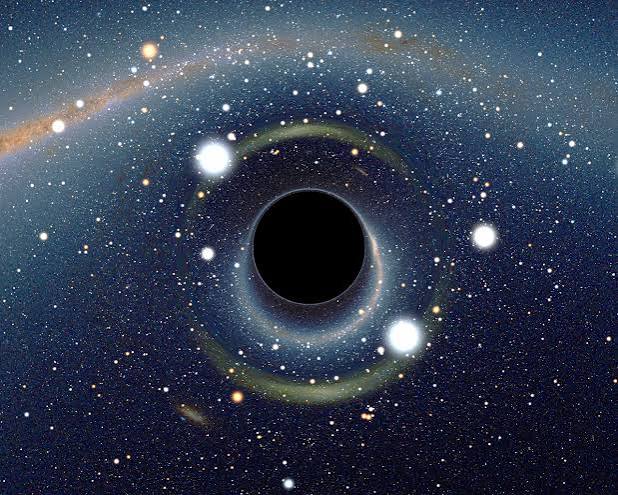
5. What Happens Inside a Black Hole?
Black holes are among the most mysterious objects in space.
A black hole forms when a massive object collapses under its own gravity. Its gravitational force becomes so powerful that nothing can escape once it crosses the boundary known as the event horizon.
Scientists have detected black holes and observed their effects on nearby stars and gas. However, what happens inside a black hole remains unknown.
At the center of a black hole is believed to be a region called a singularity, where current theories of physics cannot fully explain what occurs.
The extreme conditions inside black holes create a conflict between two major scientific theories: general relativity and quantum physics.
Solving this mystery may require a completely new understanding of how the universe works.

6. What Happened Before the Beginning of the Universe?
The origin of the universe is another fascinating science mystery.
The Big Bang theory explains that the universe began approximately 13.8 billion years ago from an extremely hot and dense state.
However, scientists still debate what happened before that event.
Did time itself begin with the Big Bang?
Was there another universe before ours?
Could the universe have gone through cycles of expansion and contraction?
Current physics struggles to answer these questions because the conditions at the beginning of the universe are beyond anything humans can directly observe.
Modern particle experiments and space observations continue helping scientists understand the earliest moments of existence.
7. Is There a Theory That Explains Everything?
Scientists have created powerful theories that explain different parts of reality.
Albert Einstein’s theory of relativity explains gravity and large-scale structures like planets and galaxies. Quantum mechanics explains the behavior of tiny particles.
However, these two areas of physics do not perfectly fit together.
A major science mystery is whether there is a single theory that can unite all forces and explain the universe completely.
Researchers have explored ideas such as string theory and quantum gravity, but no final solution has been confirmed.
A successful “theory of everything” could transform our understanding of space, time, matter, and energy.
8. Is Time Travel Possible?
Time travel is one of the most popular science mysteries because it appears frequently in stories and imagination.
According to Einstein’s theory of relativity, traveling into the future is scientifically possible in certain conditions. Objects moving extremely fast experience time differently compared with objects moving more slowly.
Astronauts traveling at very high speeds would experience slightly less passage of time compared with people on Earth.
However, traveling backward in time is far more complicated.
Current scientific understanding does not provide a practical method for moving into the past. It also creates difficult questions about cause and effect.
Could changing the past alter the present? Could paradoxes occur?
For now, time travel remains a fascinating area where science and imagination meet.

9. How Will the Universe End?
The future of the universe is another enormous science mystery.
Scientists have proposed several possibilities.
One possibility is the “heat death” scenario, where the universe continues expanding until stars disappear and energy becomes evenly distributed.
Another possibility involves dark energy becoming stronger, causing the structure of the universe itself to change dramatically.
A different possibility suggests that expansion could eventually stop, causing the universe to collapse.
These ideas are based on current observations, but the true future of the cosmos remains unknown.
The universe is so vast and its timeline is so long that humans can only study clues from the present.
10. Why Do Scientific Mysteries Matter?
Science mysteries are important because they push humanity forward.
Every unanswered question encourages new experiments, inventions, and discoveries. Many technologies we use today exist because scientists investigated mysteries that once seemed impossible to solve.
The search for answers improves our understanding of nature and our place within it.
Mysteries also teach us humility. Even with advanced technology, the universe remains far more complex than we can imagine.
The unknown is not a failure of science. Instead, it is the reason science continues to grow.
Conclusion: The Beauty of the Unknown
Science mysteries reveal how much more there is to discover about our universe. From the hidden nature of dark matter to the origins of life and the mystery of consciousness, these unanswered questions inspire curiosity and exploration.
Science is not only about finding answers; it is also about asking better questions.
Each discovery opens the door to new possibilities. The mysteries of space, time, and life remind us that knowledge is an endless journey.
As technology advances and human curiosity continues, some of today’s greatest mysteries may become tomorrow’s greatest discoveries.
The universe still has many secrets, and the search to uncover them is one of the most exciting adventures in human history.
Sources
CBC Radio – Science Mysteries and Unanswered Questions in Modern Research
NASA – Space Science and Universe Exploration
National Geographic – Scientific Discoveries and Cosmic Research
CERN – Particle Physics and Fundamental Science Research
Scientific American – Science and Technology Studies