
Important animals, most people think of wildlife that keeps ecosystems healthy. However, another group of animals has quietly transformed medicine, engineering, computer graphics, and space exploration. Their contributions continue to influence scientific research decades after their stories first began.
Science has always been driven by curiosity, creativity, and countless experiments. While groundbreaking discoveries are often credited to brilliant researchers, many of history’s greatest scientific achievements would not have been possible without animals. Some served as research models, others inspired technological innovation, and a few even became pioneers in exploring places humans had never reached.
Among the many animals that have helped shape modern science, three stand out for their extraordinary impact: the Stanford Bunny, the laboratory mouse, and Laika, the first dog to orbit Earth. Although each played a very different role, together they demonstrate how animals have expanded human knowledge and accelerated technological progress.
In this article, we’ll explore these three important animals, the discoveries they inspired, and the lasting legacy they continue to leave behind.
Why Are Some Animals Important to Science?
Scientific progress often depends on reliable models that allow researchers to test ideas, observe biological processes, and develop new technologies before applying them to humans or real-world situations.
Animals have contributed to science in several important ways:
- Helping researchers understand biology and genetics
- Supporting the development of medicines and vaccines
- Inspiring engineering and computer technology
- Expanding knowledge of space travel
- Advancing ethical discussions about scientific research
Each of the three animals discussed below represents one of these contributions in a unique way.
1. The Stanford Bunny: The Digital Rabbit That Revolutionized Computer Graphics
Although it is not a living rabbit, the Stanford Bunny is one of the most famous animal models in computer science and engineering.
The Origin of the Stanford Bunny
In 1994, Stanford University researchers Greg Turk and Marc Levoy created a highly detailed three-dimensional scan of a small terracotta bunny figurine. Their goal was to develop a reliable digital model for testing new computer graphics algorithms.
Using a range scanner, they captured multiple scans of the rabbit from different angles. These scans were later combined using a process called zippering, producing one of the earliest high-quality digital representations of a real-world object.
The original scan contained approximately 725,000 triangles, which were later reconstructed into a cleaner model containing about 69,000 triangles. At the time, this level of detail was groundbreaking.
Why Was a Bunny Chosen?
The terracotta rabbit offered several characteristics that made it ideal for scanning:
- Smooth surfaces
- Simple geometry
- Few sharp edges
- A red diffuse surface that reflected laser light efficiently
These features helped researchers produce an accurate digital model while minimizing scanning errors.
How the Stanford Bunny Changed Science
Over the past three decades, the Stanford Bunny has become one of the world’s most widely used benchmark models.
Researchers use it to test:
- 3D scanning systems
- Computer graphics algorithms
- Mesh reconstruction techniques
- Artificial intelligence models
- Computer vision software
- Virtual and augmented reality applications
Rather than creating a new object for every experiment, scientists can compare their work using the same standardized bunny model.
An Unexpected Modern Application
In 2019, researchers demonstrated an innovative project using the Stanford Bunny.
They produced a bunny-shaped object that contained DNA encoding the digital instructions needed to reproduce itself. In theory, if part of the object were recovered in the future, scientists could reconstruct the same design using the information stored in its DNA.
Although still experimental, this research suggests future possibilities such as:
- Long-term information storage
- Secure data archiving
- Medical implant records
- Self-documenting manufactured objects
The Stanford Bunny proves that even a small clay rabbit can influence generations of scientific innovation.

2. The Laboratory Mouse: The Small Animal Behind Big Medical Breakthroughs
Few animals have contributed more to modern medicine than the laboratory mouse.
For over a century, mice have been among the most important research animals because their biology closely resembles that of humans.
Why Scientists Use Mice
Laboratory mice share approximately 95% of their genes with humans.
They also offer several practical advantages:
- Small size
- Rapid reproduction
- Short life cycles
- Well-understood genetics
- Ability to study multiple generations quickly
These characteristics allow researchers to investigate diseases and potential treatments much faster than would otherwise be possible.
Contributions to Medicine
Research involving laboratory mice has helped scientists better understand:
- Cancer
- Diabetes
- Alzheimer’s disease
- Parkinson’s disease
- Cardiovascular disease
- Immune system disorders
- Rare genetic conditions
Many vaccines, medicines, and treatment strategies first underwent testing using laboratory mice before advancing to clinical trials.
Their contribution has played a major role in improving public health around the world.
Honoring the Laboratory Mouse
Because of their enormous contribution to science, researchers in Novosibirsk, Russia, unveiled a monument dedicated to laboratory mice in 2013.
The bronze sculpture depicts a mouse sitting on a granite pedestal while carefully knitting a strand of DNA.
The design symbolizes the close relationship between scientists and research animals.
According to the monument’s designer, the sculpture represents the exact moment of scientific discovery—a reminder that breakthroughs often result from collaboration between human curiosity and animal research.
Ethical Progress in Modern Research
Today’s scientific community follows much stricter ethical standards than in previous decades.
Researchers now follow the internationally recognized 3Rs principle:
- Replacement – Use alternatives whenever possible.
- Reduction – Use the fewest animals necessary.
- Refinement – Improve procedures to minimize discomfort and stress.
These guidelines ensure that animal research is conducted responsibly while continuing to advance medicine.

3. Laika: The Brave Dog That Opened the Door to Space Exploration
Long before astronauts traveled into orbit, scientists faced a critical question:
Could a living organism survive spaceflight?
The answer began with a small stray dog named Laika.
From the Streets of Moscow to Space
Laika was a mixed-breed stray dog found on the streets of Moscow.
During the 1950s, Soviet scientists believed stray dogs were well suited for space missions because they had already adapted to difficult environmental conditions.
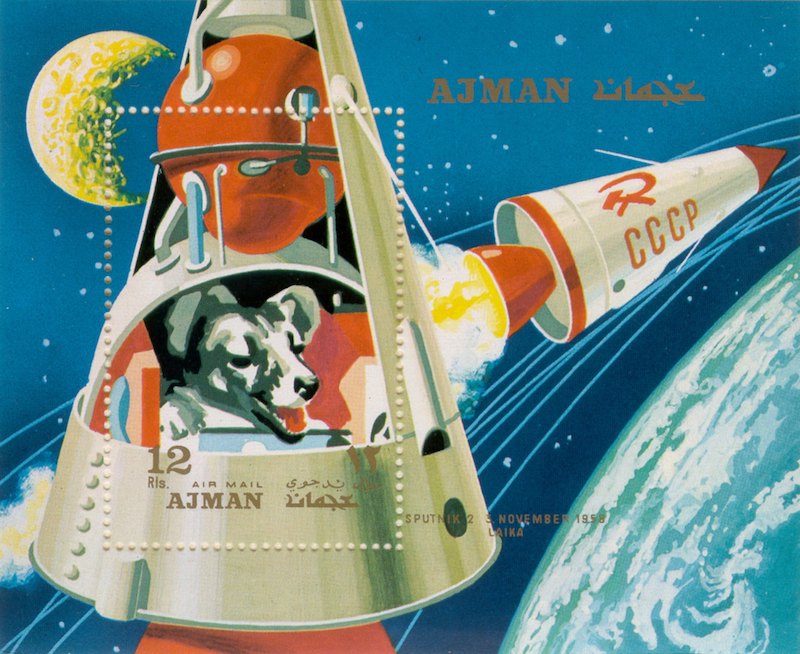
After extensive testing, Laika was selected to travel aboard Sputnik 2, launched on November 3, 1957.
She became the first living creature to orbit Earth.
Why Was the Mission Important?
Before Laika’s mission, scientists had little understanding of how living organisms would react to:
- Weightlessness
- High acceleration
- Space radiation
- Isolation
- Long-duration confinement
Data collected during the mission provided valuable information that influenced the planning of future human spaceflights.
Although the spacecraft successfully entered orbit, the mission had been designed as a one-way journey, and Laika did not survive.
Laika’s Lasting Legacy
Despite its tragic outcome, Laika’s mission marked a turning point in space exploration.
The information gathered helped scientists improve spacecraft design and life-support systems for later missions involving both animals and humans.
Laika also became a global symbol of scientific courage and inspired conversations about the ethical treatment of animals in research.
In 2008, Russia unveiled a monument honoring Laika, recognizing her role in the early history of space exploration.
Today, her story continues to remind us of both the achievements and responsibilities that accompany scientific progress.
What These Three Important Animals Teach Us
Although the Stanford Bunny, laboratory mouse, and Laika each belong to very different scientific fields, they share several common lessons.
Innovation Often Comes from Unexpected Places
A clay rabbit became one of computer science’s most famous digital models.
A tiny mouse transformed modern medicine.
A stray dog helped prepare humanity for space travel.
Their stories show that remarkable discoveries often begin with ordinary subjects.
Science Builds on Shared Knowledge
Each of these animals became a standard reference for researchers around the world.
Instead of repeating the same work independently, scientists build upon earlier discoveries, accelerating innovation for future generations.
Ethics Continue to Evolve
Scientific research today places far greater emphasis on animal welfare than in previous decades.
The legacy of these animals has contributed not only to scientific advancement but also to stronger ethical standards that guide modern research.
Conclusion
The history of science is filled with remarkable discoveries, but behind many of those achievements are animals whose contributions are often overlooked. The Stanford Bunny revolutionized computer graphics by providing one of the first standardized 3D digital models. The laboratory mouse has supported countless medical breakthroughs that continue to improve human health. Laika, the courageous space dog, helped pave the way for human space exploration by providing critical data about surviving beyond Earth’s atmosphere.
Although their roles were very different, these three important animals each changed science in lasting ways. Their stories demonstrate that progress is rarely achieved by humans alone. Instead, it is often built through our interactions with the natural world, our willingness to learn from it, and our responsibility to treat all living creatures with respect.
As technology and scientific research continue to evolve, the legacy of these important animals serves as a reminder that even the smallest or most unexpected contributors can leave an extraordinary mark on history.
FAQ
Why is the Stanford Bunny important?
The Stanford Bunny is a famous 3D computer model used worldwide to test computer graphics, imaging, and engineering algorithms.
Why are laboratory mice widely used in research?
Laboratory mice share many genetic similarities with humans and help scientists study diseases, genetics, and potential medical treatments.
Why is Laika remembered today?
Laika became the first living creature to orbit Earth in 1957, providing valuable information that contributed to the future of human space exploration.
Sources
- COMSOL. 3 Important Animals of Science from Throughout History.
- Stanford Computer Graphics Laboratory.
- National Aeronautics and Space Administration (NASA).
- Encyclopaedia Britannica.