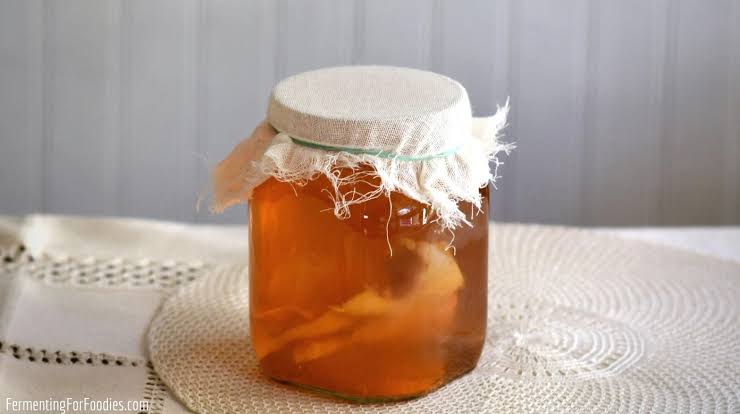
At the heart of successful kombucha making lies a fascinating living culture known as a SCOBY (Symbiotic Culture of Bacteria and Yeast). This remarkable microbial community transforms sweetened tea into a flavorful beverage filled with organic acids, subtle carbonation, and complex aromas.
Kombucha has evolved from a niche fermented beverage into a global favorite among tea lovers and wellness enthusiasts. Known for its refreshing tangy flavor, natural fizz, and potential probiotic benefits, kombucha offers a unique drinking experience that combines centuries-old fermentation traditions with modern health-conscious lifestyles.
Whether you’re interested in reducing sugary drinks, exploring fermentation, or creating customized flavors at home, learning the basics of kombucha making can be both rewarding and enjoyable.
In this comprehensive guide, you’ll discover everything you need to know about kombucha making—from understanding the science behind SCOBY to selecting ingredients, maintaining safe fermentation practices, troubleshooting common problems, and mastering advanced brewing techniques.
What Is Kombucha?
Kombucha is a fermented tea beverage traditionally made using:
- Black tea or green tea
- Sugar
- Water
- SCOBY
- Starter tea (previously fermented kombucha)
During fermentation, beneficial bacteria and yeast consume the sugar in sweetened tea and produce various compounds, including:
- Organic acids
- Carbon dioxide
- Small amounts of alcohol
- Natural flavor compounds
The result is a lightly sparkling beverage with a pleasant balance of sweetness and acidity.

The History of Kombucha
Although the exact origins remain uncertain, kombucha is believed to have originated in East Asia more than 2,000 years ago.
Over time, it spread through:
- China
- Japan
- Russia
- Eastern Europe
- Germany
- North America
- Australia
Today, kombucha is available in supermarkets, cafés, and health food stores worldwide, while home brewing continues to gain popularity because it allows complete control over ingredients and flavor.
Understanding SCOBY: The Heart of Kombucha Making
No discussion of kombucha making is complete without understanding the importance of SCOBY.
SCOBY stands for:
Symbiotic Culture of Bacteria and Yeast
Rather than being a single organism, SCOBY is a living ecosystem where beneficial bacteria and yeast work together during fermentation.
Many brewers affectionately call it the “mother” because it produces a new layer during each successful batch.
Despite its nickname “kombucha mushroom,” SCOBY is not a mushroom or fungus.
What Is a SCOBY Made Of?
A healthy SCOBY contains three essential components:
Beneficial Bacteria
Acetic acid bacteria convert alcohol into organic acids, giving kombucha its signature tart taste.
Yeast
Yeast consumes sugar and produces:
- Carbon dioxide
- Alcohol
- Flavor compounds
These products become fuel for the bacteria during fermentation.
Cellulose
Beneficial bacteria produce natural cellulose, creating the thick, rubbery structure commonly recognized as the SCOBY.
This cellulose layer floats on the tea’s surface and protects the fermentation environment.
Why Is SCOBY So Important?
SCOBY performs several critical functions during fermentation.
Converts Sugar Into Flavor
Without SCOBY, sweet tea remains sweet tea.
The microorganisms gradually transform sugar into acids, producing kombucha’s distinctive flavor.
Produces Natural Carbonation
Yeast generates carbon dioxide throughout fermentation, creating the gentle bubbles kombucha is known for.
Maintains Safe Fermentation
As acidity increases, the pH drops to a level that discourages the growth of many unwanted microorganisms.
This acidic environment helps support a stable fermentation process when proper brewing practices are followed.
Creates Complex Aromas
The interaction between bacteria and yeast develops the fruity, slightly vinegary, and refreshing aroma that distinguishes kombucha from ordinary tea.
Essential Ingredients for Kombucha Making
Successful kombucha begins with quality ingredients.
Tea
Traditional choices include:
- Black tea
- Green tea
- Oolong tea
These teas provide nutrients that support healthy microbial activity.
Avoid teas containing added oils or artificial flavorings, as they may interfere with fermentation.
Sugar
Sugar serves as food for the microorganisms—not merely as a sweetener.
Suitable options include:
- White cane sugar
- Organic cane sugar
Artificial sweeteners should not be used because they cannot properly support fermentation.
Water
Filtered water is generally preferred because excessive chlorine may affect microbial activity.
Starter Tea
Starter tea is mature kombucha from a previous batch.
It lowers the initial pH, helping establish favorable fermentation conditions from the beginning.
SCOBY
A healthy SCOBY should appear:
- Cream-colored to light brown
- Smooth or slightly textured
- Flexible
- Free from fuzzy mold
Color variations are normal and often reflect the type of tea used.
Equipment Needed for Brewing Kombucha
Fortunately, kombucha making requires only a few basic tools.
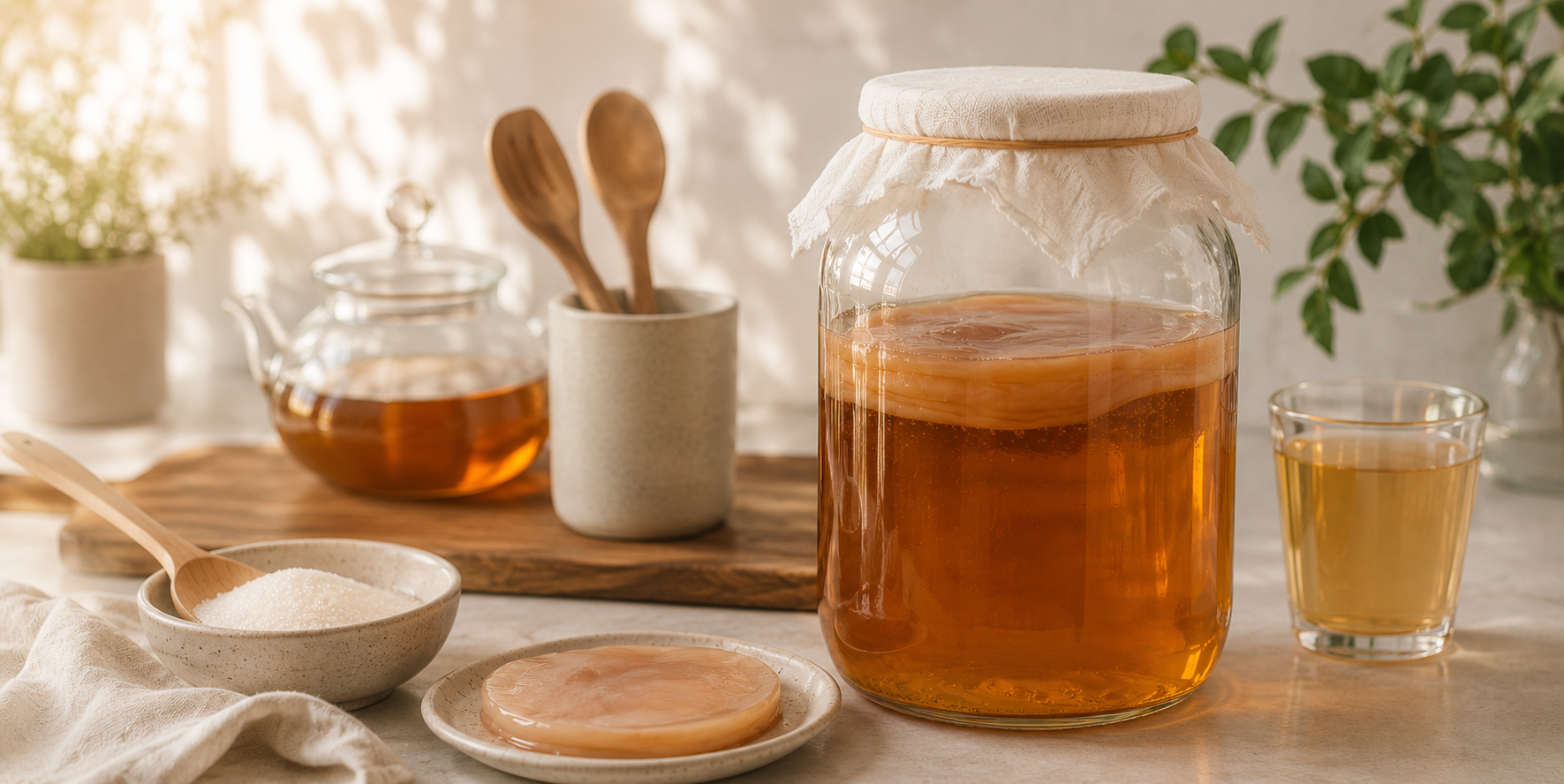
Recommended equipment includes:
- Large glass fermentation jar
- Breathable cloth cover
- Rubber band
- Measuring cups
- Stainless steel or food-grade plastic spoon
- Glass bottles for secondary fermentation
- Funnel
- pH test strips (optional but helpful)
- Thermometer (optional)
Avoid using reactive metals such as aluminum during fermentation.
Step-by-Step Kombucha Making Process
Step 1: Brew Sweet Tea
Prepare strong tea using your preferred tea leaves.
Dissolve sugar completely while the tea is hot.
Allow the tea to cool completely before adding the SCOBY.
Step 2: Add Starter Tea
Pour starter kombucha into the cooled tea.
This immediately lowers the pH and creates favorable conditions for fermentation.
Step 3: Add the SCOBY
Gently place the SCOBY into the tea.
Don’t worry if it floats, sinks, or tilts—these are all normal behaviors.
Step 4: Cover the Jar
Use a clean cloth secured with a rubber band.
The cover keeps insects out while allowing airflow.
Step 5: Ferment
Store the jar:
- Away from direct sunlight
- At room temperature
- In a clean location
Fermentation generally takes 7–14 days, depending on temperature and taste preference.
Step 6: Taste Regularly
Beginning around day seven, sample a small amount every day or two.
You’ll notice the beverage gradually becoming:
- Less sweet
- More acidic
- Slightly fizzy
When the balance matches your preference, fermentation is complete.
Understanding Primary Fermentation
Primary fermentation is where the SCOBY performs most of its work.
During this stage:
- Yeast consumes sugar.
- Carbon dioxide develops.
- Alcohol forms in small amounts.
- Bacteria convert alcohol into organic acids.
- Acidity increases.
- Flavor becomes more complex.
A new SCOBY usually begins forming on the surface.
Secondary Fermentation
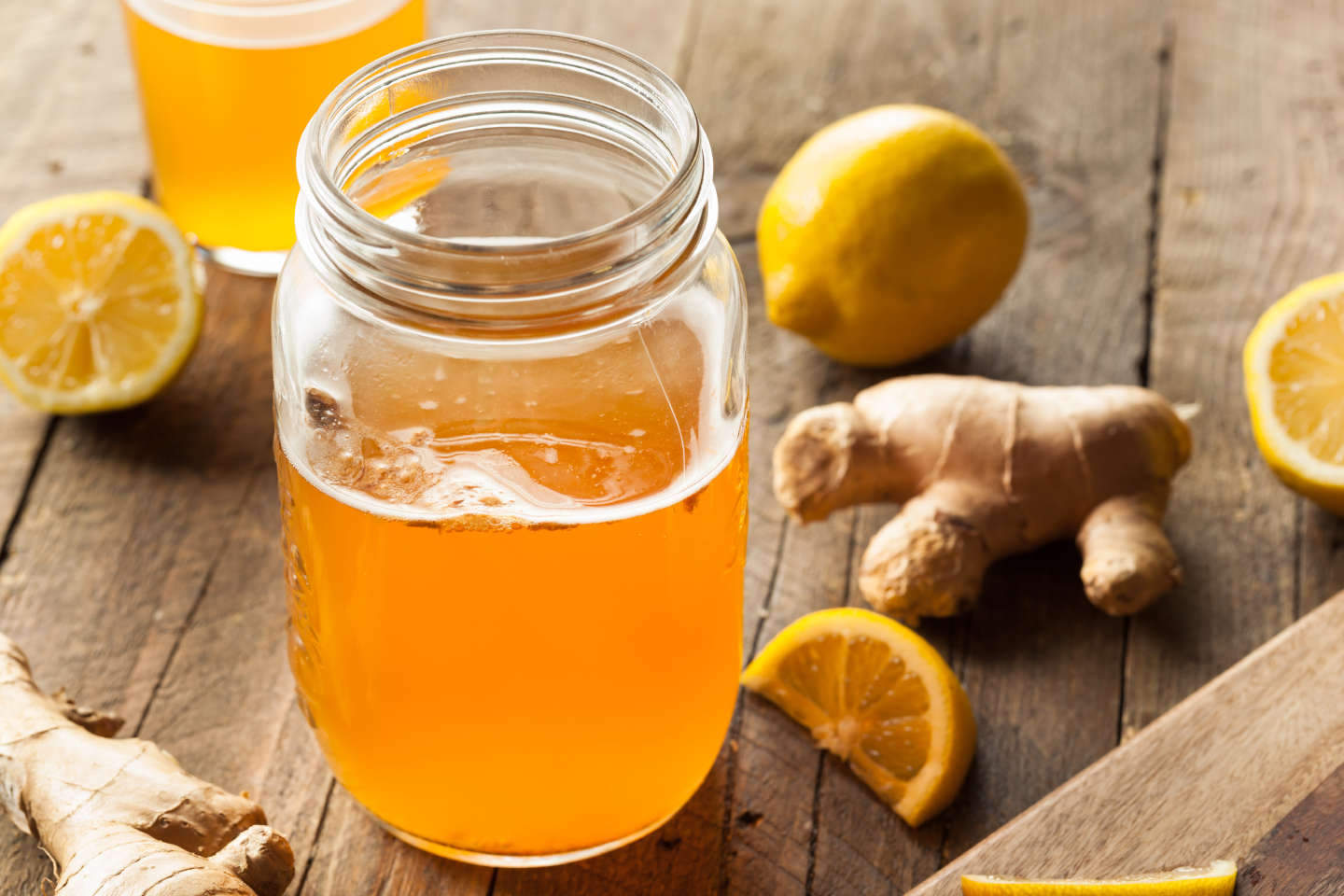
Many brewers choose to perform a second fermentation to enhance carbonation and flavor.
Popular additions include:
- Ginger
- Lemon
- Blueberries
- Strawberries
- Mango
- Pineapple
- Apple
- Peach
- Herbs
- Spices
Seal the flavored kombucha in airtight bottles for several days before refrigerating.
Always open bottles carefully, as pressure may build during carbonation.
How to Care for Your SCOBY
A healthy SCOBY can produce many batches when properly maintained.
Store in a SCOBY Hotel
If you’re taking a break from brewing, place the SCOBY in a glass jar filled with finished kombucha.
Keep it:
- At room temperature
- Away from direct sunlight
- Covered with breathable fabric
This “SCOBY hotel” can keep cultures active for weeks or even months with proper care.
Keep Everything Clean
Sanitation is one of the most important aspects of kombucha making.
Wash equipment thoroughly using:
- Hot water
- Mild soap
Rinse completely before use.
Avoid harsh antibacterial cleaners that may leave residues.
Ideal Fermentation Conditions
Temperature greatly affects fermentation speed.
Generally, kombucha ferments best between 24–27°C (75–80°F).
Lower temperatures slow fermentation.
Warmer temperatures accelerate microbial activity and may produce a more acidic beverage more quickly.
Monitoring pH
Healthy kombucha becomes increasingly acidic during fermentation.
Many beginners use pH strips to monitor progress.
Finished kombucha typically reaches a pH between 3.0 and 3.5, contributing to its characteristic tartness and helping maintain a stable fermentation environment.
Potential Benefits of Kombucha
Scientific research on kombucha is ongoing, and while many people enjoy it as part of a balanced diet, more human studies are needed to confirm specific health effects.
Potential benefits may include:
Natural Probiotics
Fermentation produces microorganisms that may contribute to gut microbial diversity.
Tea Antioxidants
Tea naturally contains polyphenols that may help protect cells from oxidative stress.
Organic Acids
Fermentation generates organic acids that contribute to kombucha’s unique flavor profile.
Lower Sugar Than Sweet Tea
Because microorganisms consume part of the added sugar, finished kombucha generally contains less sugar than the original sweetened tea, though amounts vary depending on brewing time.

Common Kombucha Making Mistakes
Using Flavored Tea
Essential oils may interfere with fermentation.
Stick to plain tea for the best results.
Using Artificial Sweeteners
Microorganisms require real sugar to ferment successfully.
Poor Sanitation
Dirty equipment increases the risk of contamination.
Always clean brewing tools thoroughly.
Fermenting Too Long
Excessive fermentation can create an overly sour beverage that resembles vinegar.
Taste regularly to find your preferred balance.
Ignoring Temperature
Large temperature fluctuations may affect fermentation speed and consistency.
How to Tell If Your Kombucha Has Gone Bad
A healthy kombucha culture typically shows:
- Cream or tan SCOBY
- Brown yeast strands
- Vinegar-like aroma
- Slight bubbles
Discard the batch if you observe:
- Fuzzy mold
- Bright green, black, or blue growth
- Strong rotten odors
- Signs of contamination on the SCOBY surface
When in doubt, it’s safest to start over with a fresh culture.
Frequently Asked Questions About Kombucha Making
Can I reuse my SCOBY?
Yes. A healthy SCOBY can be reused repeatedly and will usually produce a new layer with each batch.
Why did my SCOBY sink?
This is completely normal.
New SCOBY growth often forms at the surface regardless of where the original culture rests.
How long does kombucha last?
Refrigerated kombucha generally maintains its best flavor for several weeks, though taste will continue to evolve gradually over time.
Can I use honey instead of sugar?
Traditional kombucha recipes use cane sugar because it provides a consistent food source for the microbial culture. Other sweeteners may behave differently and are often used in specialized fermentation methods.
Is homemade kombucha alcoholic?
Fermentation naturally produces a small amount of alcohol. The exact amount varies depending on ingredients, fermentation time, and brewing conditions.
Expert Tips for Better Kombucha Making
To consistently brew delicious kombucha:
- Start with high-quality tea.
- Use fresh SCOBY cultures.
- Measure ingredients accurately.
- Maintain consistent room temperatures.
- Taste throughout fermentation.
- Keep detailed brewing notes.
- Experiment with fruit only during secondary fermentation.
- Store finished kombucha in clean glass bottles.
- Refrigerate promptly once it reaches your desired flavor.
Over time, small adjustments to tea strength, fermentation duration, and flavor additions will help you develop a brewing style that suits your personal taste.
Conclusion
Learning kombucha making is both a science and an art. With just a handful of ingredients—tea, sugar, water, starter tea, and a healthy SCOBY—you can transform an ordinary sweetened beverage into a refreshing fermented drink with complex flavors and natural effervescence.
The SCOBY serves as the foundation of every successful batch, driving fermentation, shaping taste, and creating the unique characteristics that make kombucha so popular around the world. By maintaining good hygiene, using quality ingredients, monitoring fermentation, and caring for your culture properly, you can enjoy consistent, homemade kombucha for years to come.
Whether you’re brewing your very first batch or refining your fermentation skills, patience and attention to detail are the keys to success. As your confidence grows, you’ll discover endless opportunities to experiment with teas, fruits, herbs, and spices, creating personalized kombucha that’s both delicious and uniquely your own.
Sources
- Kombucha Equipments – Why Is SCOBY So Important in Kombucha Making?
- Centers for Disease Control and Prevention (CDC) – Kombucha Tea Information
- U.S. Food and Drug Administration (FDA) – Food Fermentation Safety
- Harvard T.H. Chan School of Public Health – The Nutrition Source: Tea
- National Center for Complementary and Integrative Health (NCCIH) – Fermented Foods
- World Health Organization (WHO) – Food Safety Guidelines