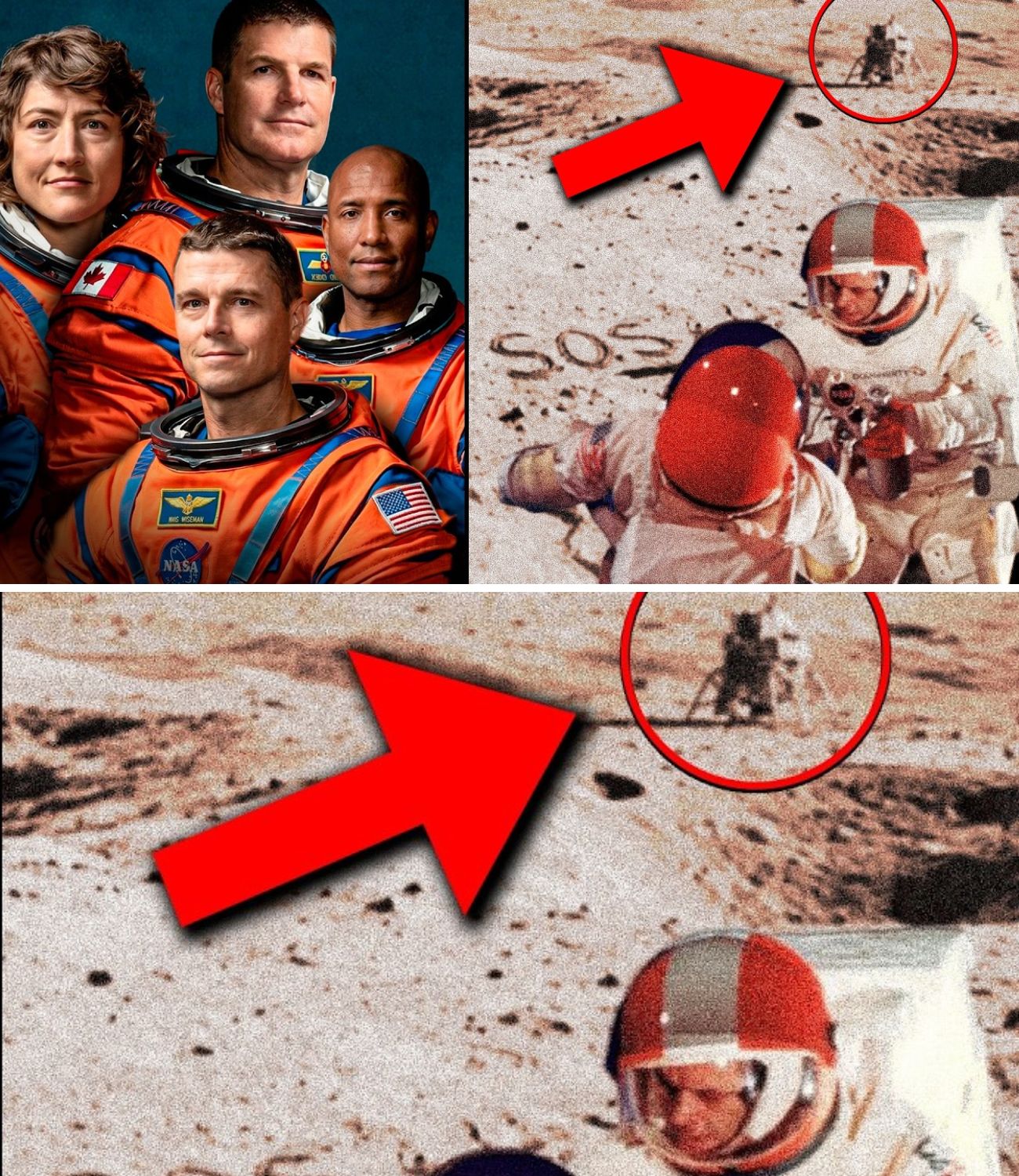
The return to the Moon is no longer a dream of the distant future; it is the reality of the present. As of April 2026, the Artemis 2 mission has successfully reached deep space, marking the first time in over five decades that human beings have ventured beyond low Earth orbit. Launched on April 1, 2026, this mission is the culmination of years of geopolitical shifts, scientific breakthroughs, and a renewed interest in our lunar neighbor.
With the crew scheduled to return to Earth on Friday, April 10, 2026, the world is watching. To understand why we are going back now, we must first examine why we left, who is currently making the journey, and the incredible stakes—both known and mysterious—waiting among the lunar craters.
Part I: The Long Hiatus (1972–2026)
In July 1969, the Apollo 11 mission placed Neil Armstrong and Buzz Aldrin on the lunar surface. Between then and 1972, twelve astronauts walked on the Moon, a feat that cost the equivalent of $280 billion in today’s currency. Yet, after Eugene Cernan closed the hatch of Apollo 17 in December 1972, humanity did not return for 53 years.
The reasons for this departure were primarily political and financial:
-
Narrative Victory: The “Space Race” was a struggle for ideological supremacy between the U.S. and the Soviet Union. Once the U.S. reached the Moon, the primary political objective was achieved.
-
Budgetary Shifts: Without a direct rival to spur competition, Congress began cutting NASA’s budget, leading to the cancellation of Apollo missions 18, 19, and 20.
-
Focus on Low Earth Orbit: NASA shifted its focus to the Space Shuttle program and the International Space Station (ISS).
The shift back toward the Moon began around 2010, fueled by the emergence of new space powers. China’s successful landing on the far side of the Moon in 2019 and their sample return mission in 2020 signaled that the lunar surface was once again contested territory.

Part II: The Artemis 2 Crew
The Artemis program, named after the twin sister of Apollo in Greek mythology, is designed to be more inclusive and international than its predecessor. The four astronauts currently aboard the Orion spacecraft (christened Integrity) represent a new era of exploration:
These four individuals are currently validating the life support and navigation systems required for deep space. On April 6, 2026, they officially broke the all-time distance record for a crewed spacecraft, reaching 252,756 miles (406,771 km) from Earth, surpassing the record set by Apollo 13 in 1970.
Part III: Scientific Objectives and the Polar Discovery
While the Apollo missions focused on equatorial regions, the Artemis program is fixated on the lunar poles. The reason for this shift is the definitive confirmation of water ice.
In 2023, India’s Chandrayaan-3 mission became the first to land near the lunar South Pole, confirming that water ice exists within the surface layers of the soil. This discovery is a “game-changer” for several reasons:
-
Sustainability: Water can be purified for drinking and used to grow food in lunar greenhouses.
-
Fuel Production: By separating hydrogen from oxygen, engineers can create rocket propellant.
-
Spaceport Potential: With a fuel source on the Moon, it becomes a stepping stone for missions to Mars and the asteroid belt, significantly reducing the cost of launching from Earth’s deep gravity well.
Part IV: Geopolitics and Energy Resources
The return to the Moon is also driven by the potential for energy independence. The lunar surface contains a rare isotope known as Helium-3, which is deposited by solar winds. Because the Moon lacks a magnetic field, it has accumulated an estimated 1 million tons of this material over billions of years.
The Potential of Helium-3
-
Nuclear Fusion: Helium-3 is considered an ideal fuel for nuclear fusion, the process that powers the sun.
-
Clean Energy: Unlike current fission reactors, a fusion plant using Helium-3 would produce virtually no long-term radioactive waste.
-
Global Demand: Scientists estimate that just 100 to 200 tons of Helium-3 could power the entire Earth for one year.
The competition for these resources is intense. China has announced plans for a permanent lunar research station by 2030, targeting the same water-rich craters as NASA. This has created a “race for the poles,” where the first nation to establish a presence may dictate the rules of the next era of human expansion.
Part V: Anomalies and Unexplained Observations
Beyond the hard science and politics, there is a persistent layer of mystery regarding the Moon. For decades, both professional and amateur astronomers have documented Transient Lunar Phenomena (TLP)—short-lived lights, colors, or changes in appearance on the lunar surface.
One of the most discussed areas is the Aristarchus Crater, one of the brightest spots on the Moon.
-
September 2012: Amateur astronomers recorded sequences of objects appearing to move near the crater.
-
March 2019: Telescopic footage captured high-speed objects emerging from the center of the region.
-
June 2020: Additional recordings showed floating anomalies above the crater floor.
While NASA generally attributes these to outgassing, meteorite impacts, or optical illusions, the “forced silence” of previous generations of astronauts has fueled public curiosity. Buzz Aldrin famously mentioned seeing unidentified objects during the Apollo 11 mission, later suggesting they might have been panels from their own rocket, though the definitive nature of these sightings remains a topic of debate among enthusiasts.
Part VI: The Return of Integrity
As Artemis 2 approaches its splashdown on Friday, April 10, the mission stands as a bridge between the era of Eugene Cernan—who famously wrote his daughter’s initials in the lunar dust—and a future where humanity is a multi-planetary species.
The mission is not just about beating a record; it is about establishing the Integrity (as the ship is named) of our commitment to exploration. Whether we are going back for fuel, for water, for geopolitical dominance, or to investigate the unexplained, one thing is certain: the Moon is no longer just a light in the sky. It is our new frontier.
Key Dates for the Artemis 2 Mission
-
Launch: April 1, 2026
-
Record Distance Achieved: April 6, 2026
-
Lunar Far Side Pass: April 7, 2026
-
Return/Splashdown: April 10, 2026
The data and testimonies brought back by Wiseman, Glover, Koch, and Hansen will determine the timeline for Artemis 3, which aims to put the first humans back on the surface since 1972. As the Orion capsule descends into the Pacific near San Diego, it carries with it the answers to why we left and the promise of why we will stay.
Do you believe that the resources on the Moon, such as Helium-3 and water ice, are enough to justify the billions spent, or is there a deeper, more fundamental drive for humanity to reach the stars?