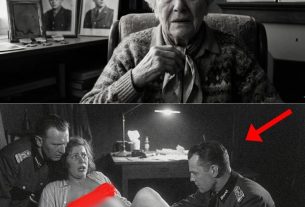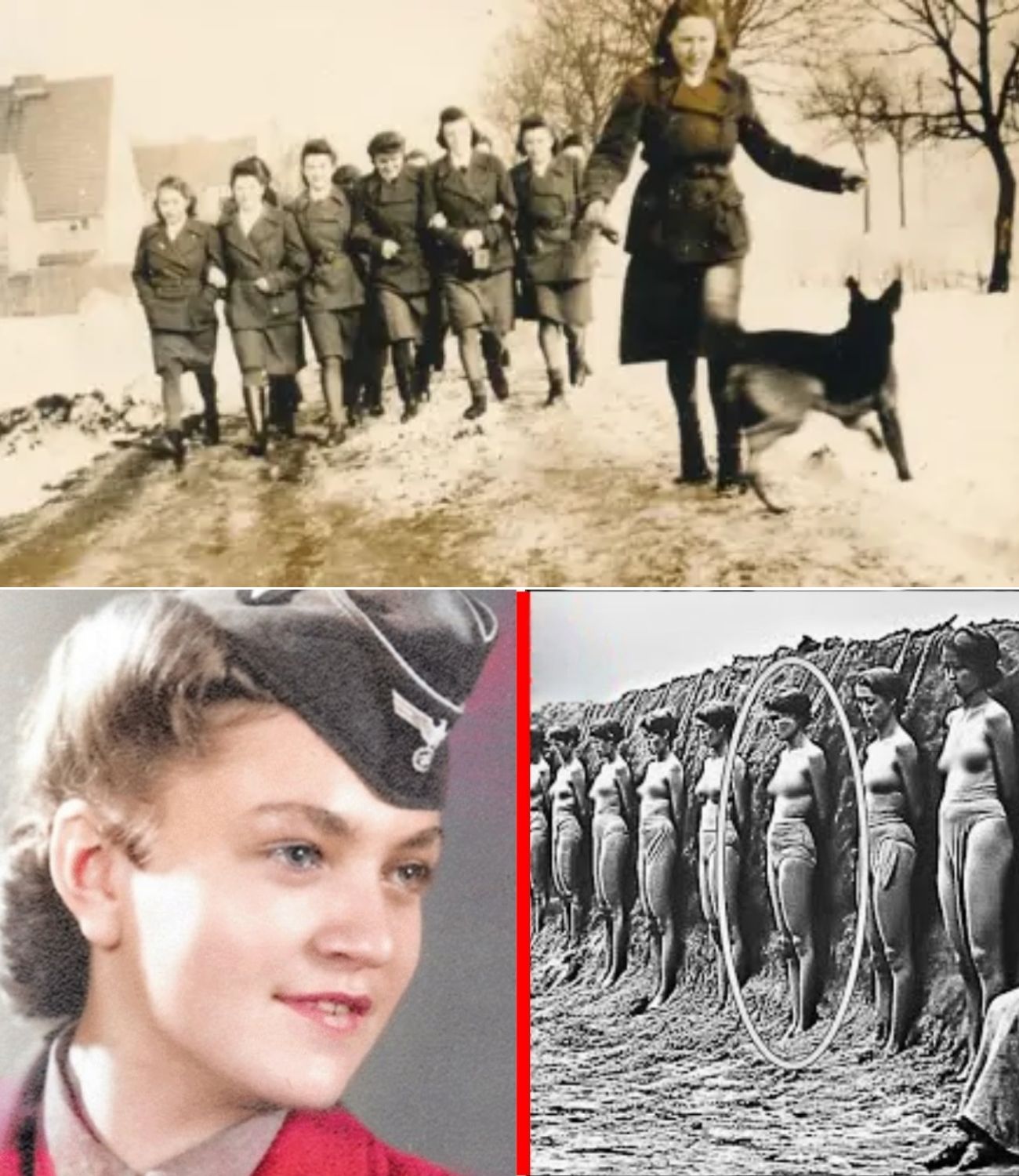
The history of the concentration camp system is often told through the lens of the male SS officers who designed and commanded it. However, a darker, often overlooked chapter involves the women who stepped out of their roles as sisters, daughters, and neighbors to become active participants in a machinery of systematic dehumanization. Between 1942 and 1945, thousands of women—many of whom had previously led ordinary lives—donned the gray uniform of the Aufseherinnen (female overseers) and enforced a regime of terror that left a permanent stain on human history.
This is the story of how ordinary citizens were transformed into instruments of state-sponsored cruelty and how the world eventually sought to hold them accountable.
The Recruitment of the “Ordinary”
In the early years of the Nazi regime, the ideal German woman was defined by the concept of “Kinder, Küche, Kirche” (Children, Kitchen, Church). The state insisted that a woman’s primary duty was domestic and maternal. However, as the war expanded across Europe and the Soviet Union, German manpower was stretched to its breaking point. By 1942, with millions of men on the front lines, the burgeoning network of concentration camps faced a critical labor shortage.
To fill this void, the SS began a massive recruitment drive for female guards. Advertisements appeared in local newspapers and job centers, often framed as “clerical” or “protective” service for the state. Many of the women who responded were young—between 20 and 35—and came from working-class backgrounds. They had been factory workers, nurses, or teachers.
The lure was not always ideological. For many, the position offered a steady salary, better rations, and a sense of authority that was otherwise unavailable to women in that society. They were promised a comfortable life in exchange for their “service.” What they found, however, was a system designed to strip away their empathy and replace it with chilling indifference.

Ravensbrück: The Training Ground of Cruelty
The transformation of these women began at Ravensbrück, located fifty miles north of Berlin. Established in 1939, it was the only major concentration camp dedicated almost exclusively to female prisoners. Over its existence, it held more than 130,000 women, including resistance fighters, Jewish women, and political dissidents.
Ravensbrück served as the primary training center for female guards. Here, new recruits underwent a psychological hardening process. They were taught that the prisoners were not human beings, but “enemies of the state” and “social burdens.” They were instructed to maintain an absolute distance, to never show kindness, and to view violence as a necessary tool of discipline.
The Role Models of Terror
Recruits were encouraged to emulate senior overseers like Dorothea Binz. Known for her calculated brutality, Binz would patrol the camp with a whip and a pistol, frequently using physical force to maintain “order.” Under her guidance, the recruits learned that compassion was a sign of weakness.
Prisoners at Ravensbrück lived in overcrowded barracks, surviving on meager rations while performing backbreaking labor, such as digging trenches or sewing uniforms for the military. The guards oversaw every aspect of this misery. Furthermore, the camp became infamous for “medical research” performed on prisoners—procedures that involved the deliberate infection of wounds and bone-breaking experiments. The guards were the ones who dragged the terrified women into the infirmaries, often mocking their suffering.
Auschwitz-Birkenau: The Heart of the Death Machine
As the camp system expanded, the most “capable” graduates of Ravensbrück were sent to Auschwitz-Birkenau, the largest extermination center in occupied Poland. Between 1942 and 1945, approximately 200 female guards were stationed there, holding significant power over the lives of hundreds of thousands of prisoners.
The Face of the Young Perpetrator
Among the most notorious was Irma Grese, who arrived at Auschwitz at the age of nineteen. Despite her youth, her cruelty was legendary among survivors. She was known to force prisoners to stand for hours in the freezing cold and took visible pleasure in the physical punishment she administered.
The Senior Overseers
Above Grese stood Maria Mandel, the senior supervisor of the female camp. Mandel held the power of life and death during the “selections.” She would walk the rows of women during roll call, pointing a gloved finger at those who appeared too weak or sick to work. These individuals were immediately sent to the gas chambers. Historians estimate that Mandel was directly responsible for the deaths of over 500,000 people.
In a bizarre display of psychological torment, Mandel organized a female orchestra, forcing talented prisoners to play upbeat music as their fellow captives were marched to their deaths. This juxtaposition of art and slaughter was a hallmark of the camp’s atmosphere. Other figures like Therese Brandl and Elisabeth Volkenrath further solidified the reputation of the female guards as symbols of terror who were often feared even more than the men, as their cruelty was often more personal and direct.
Majdanek and the “Stomping Mare”
In the camp of Majdanek, near Lublin, the brutality was similarly industrialized. Here, Hermine Braunsteiner earned the nickname “The Stomping Mare.” Survivors recalled her using her heavy, steel-capped boots to strike the elderly and the weak. Her behavior was marked by a volatile temper; she was known to drag women by their hair and deliver fatal blows for the slightest perceived infraction.
Elsa Ehrich, another guard at Majdanek, was noted for her chilling precision. She viewed the process of selection and extermination as a bureaucratic task, devoid of emotion. For these women, the camp was not just a place of work, but a place where they could exercise absolute power over those they had been taught to despise.
Bergen-Belsen: The Collapse into Despair
Toward the end of the war, many guards were transferred to Bergen-Belsen in northern Germany. As the Nazi regime crumbled, the camp became a dumping ground for survivors of the “death marches.” The infrastructure collapsed; there was no food, no water, and no medical care.
When British forces liberated the camp on April 15, 1945, they found 60,000 starving survivors and over 10,000 unburied corpses. The female guards, including Irma Grese and Elisabeth Volkenrath, had remained at the camp until the end. The imagery captured by liberating forces—of female guards casually tossing bodies into mass graves under British supervision—horrified the global public. It challenged the long-held assumption that women were inherently more compassionate than men.
The Pursuit of Justice
As the war ended, many female guards attempted to vanish. They burned their uniforms, cut their hair, and tried to blend into the millions of refugees and displaced persons wandering through Europe. However, the determination of survivors and Allied investigators made it difficult to hide forever.
The Belsen Trial
In late 1945, the British held the Belsen Trial in Lüneburg. Eleven female guards were among the defendants. Irma Grese, Elisabeth Volkenrath, and Juana Bormann were convicted of war crimes and crimes against humanity. All three were executed by hanging on December 13, 1945. Grese, at 22, remains the youngest woman executed under British law in the 20th century.
The Hunt for Hermine Braunsteiner
The case of Hermine Braunsteiner, “The Stomping Mare,” highlighted the difficulty of tracking those who fled. After the war, she married an American soldier and moved to Queens, New York, where she lived for years as a quiet housewife named Mrs. Ryan. It wasn’t until 1964 that Nazi hunter Simon Wiesenthal tracked her down. Her eventual extradition and 1981 life sentence in Germany was a landmark moment for Holocaust justice.
Other Sites of Perpetration
Justice was also sought for those at Stutthof, where Gerda Steinhoff was executed in 1946, and Plaszów, where guards like Luise Danz were responsible for grueling labor details. In the subcamp of Helmbrechts, guards forced prisoners on a deadly march in the final weeks of the war, shooting those who fell behind. While some were caught, many more returned to their lives in Germany and Austria, never facing a courtroom.
A Legacy of Accountability
The study of female perpetrators in the Nazi system has forced a re-examination of how we view gender and violence. It is now understood that approximately 3,700 women served as guards in the camp network. Research has shown that these women were not “monsters” born with a taste for blood, but rather ordinary citizens who were radicalized by a hateful ideology and given the power to act on it without consequence.
Modern Significance
As recently as 2015, investigations into women like Hilde Michnia (who served at Bergen-Belsen) have continued. These late-stage trials serve as a reminder that there is no statute of limitations on crimes against humanity.
Why We Remember
The history of these women is preserved in memorials and museums today to serve as a warning. It demonstrates that under the right (or wrong) social conditions, the “ordinary” can become the “extraordinary” in the worst possible way. Their actions left deep physical and psychological scars on the survivors, and their stories are a necessary part of the historical record to ensure that such a system is never allowed to rise again.
By documenting their crimes, we honor the dignity of the victims and reinforce the global commitment to human rights and the rule of law.