The legendary image of the Old West is often painted in broad strokes of heroism and cinematic duels, but the reality of the frontier was far grittier. Danger in the 19th-century American saloon almost never burst in with a dramatic bang; instead, it slipped in through the cracks of daily routine. Behind the swinging doors lay a world defined not by glory, but by survival, pragmatism, and a constant battle against the invisible threats of poor sanitation and hazardous vice.
The Operation of Cleanliness
In the mid-1800s, basic hygiene was a monumental task rather than a simple habit. Taking a bath was a full-scale operation that could take hours to prepare. One had to haul heavy buckets from a well, light the wood stove, wait for the water to boil, and drag a heavy metal tub to the center of the room. In many frontier households, a single tub of water was used in a strict hierarchy: father, then mother, then children in order of age.
By the time the water reached the youngest child, it had transformed into a lukewarm, cloudy soup of sediment and soap scum. Oral hygiene followed a similarly primitive path. With modern dental tools non-existent, residents often used small blades or bone picks to scrape debris from their teeth. When infections inevitably occurred, relief was found not in a medical clinic, but in a barber’s chair or at a blacksmith’s forge. There, with rusted pliers and a generous shot of whiskey to dull the sensation, the offending tooth was simply wrenched out.
The towns themselves offered little help. With no established sewage systems, refuse was tossed directly into the streets. Rain and wind conspired to turn this waste into a thick slurry of mud and dust. Part of that toxic mixture crossed the saloon doors every hour, stuck to the soles of boots, the hems of heavy coats, and the iron-rimmed wheels of wagons. Inside, crowded and airless rooms became sanctuaries for lice, flies, and pests. The mathematics of the era were simple but deadly: poor hygiene plus zero sanitation equaled a playground for pathogens.

The Invisible Threat: Disease and Contagion
While the average saloon patron might have feared a stray bullet or a barroom brawl, the true threat lived in the invisible. In these cramped spaces, diseases gained terrifying momentum. Cholera traveled through shared cups that were rinsed in haste with contaminated water. Tuberculosis (then known as consumption) thrived in smoke-filled rooms, where the air was thick with the sound of persistent coughing that stretched until dawn.
Smallpox, agile and devastating, jumped from skin to skin like fire through dry grass. By the end of a long night, every innocent gesture—a toast, a handshake, or a hurried sip from a common vessel—could spark a lethal fever. It was the daily routine, not the high-noon duel, that dug the majority of the graves in the Old West.
“Coffin Varnish” and “Tarantula Juice”
If the environment didn’t claim a man, the bottle often tried. High-quality, aged bourbon was a rarity on the frontier. What actually crossed the bar were concoctions with nicknames that served as both humor and a dark warning: coffin varnish, tarantula juice, or rat poison.
To keep profits high and costs low, many saloon owners or local suppliers “rectified” their own spirits. They began with raw grain alcohol and added additives to mimic the appearance of aging. Color was achieved with burnt sugar or prune juice, but the “kick” often came from much more hazardous sources. It was common to find alcohol laced with:
-
Chewing tobacco: To provide a nicotine-heavy punch.
-
Turpentine and Creosote: Used to simulate the “bite” of high-proof whiskey.
-
Strychnine: Added in small amounts under the mistaken belief it acted as a stimulant.
The result was a harsh liquid strong enough to cause nausea, tremors, and temporary blindness. Even the beer offered no respite; without refrigeration, it was served warm and flat, often sitting in open barrels where it became a breeding ground for bacteria. Every glass raised was a gamble with one’s internal organs.
The Reality of Saloon Society
The popular image of vice and violence in the West rarely matches the historical record. While the saloon earned its reputation as a “den of iniquity,” daily life ran at a much more pragmatic pace. Most clashes were brief and fueled by alcohol, usually erupting over unpaid debts, disputed card games, or personal insults.
As towns became more established, many required patrons to check their firearms at the door. This didn’t end conflict, but it shifted the outcome; fists and heavy furniture often spoke louder than triggers. Inside, the rhythm of the room was dictated by the gambling table. Dealers treated their reputations like capital; a dealer known for fairness kept the seats filled, while masters of deceit utilized marked decks and subtle sleight-of-hand to strip newcomers of their wages.
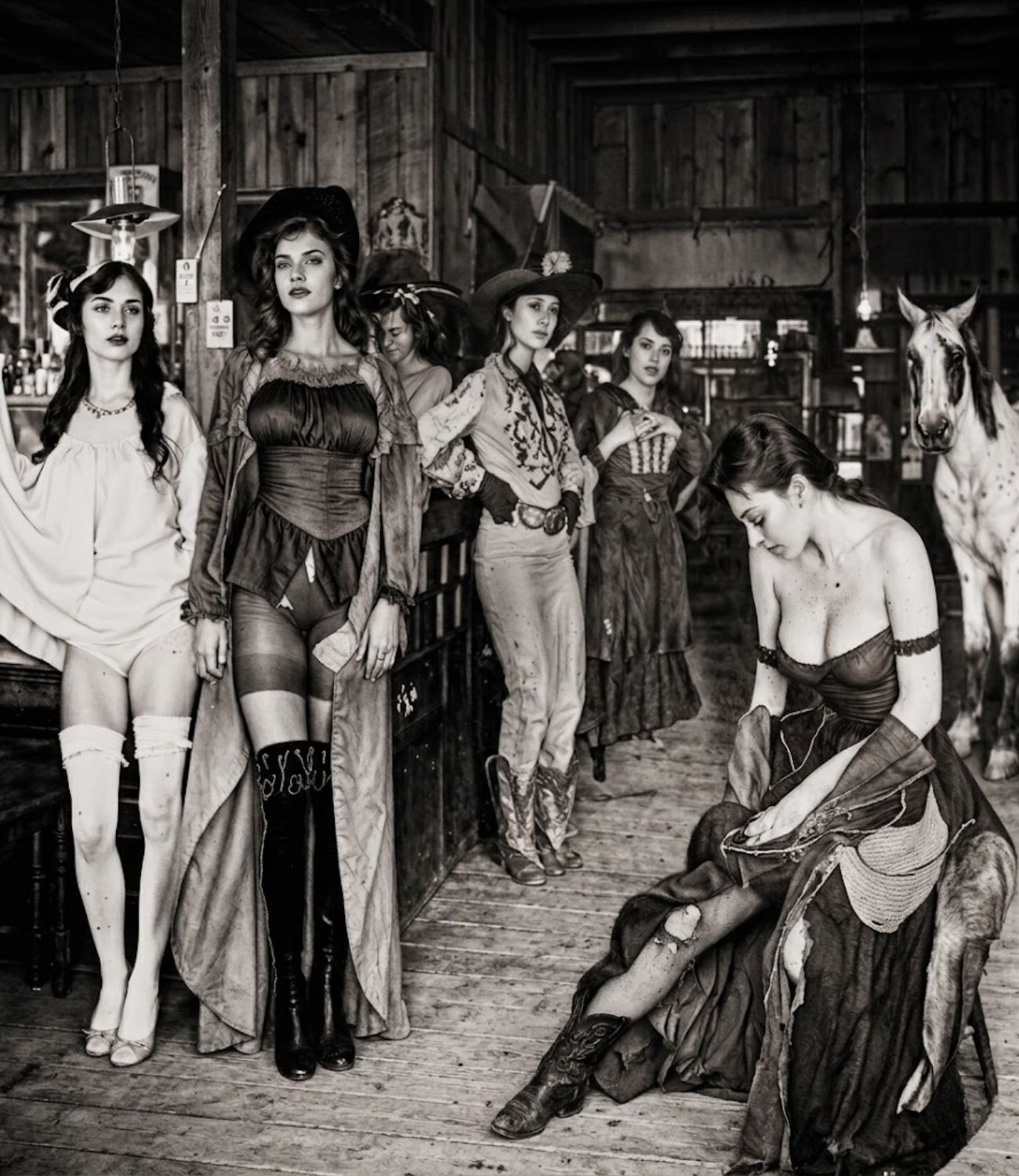
The role of women in this environment was strictly professional. Saloon girls were experts in “sociability”—they sang, danced, listened to the weary stories of miners, and encouraged the purchase of drinks to keep the business profitable. For many, this was a rare path to financial autonomy in a world that offered few careers for women. While some were involved in more intimate trades, it was often a separate business governed by its own unspoken codes and significant risks.
The Social Hierarchy of the Frontier
Not everyone who approached the swinging doors was permitted entry. The saloon was a social machine governed by invisible but rigid rules of exclusion and etiquette.
The Law of Discretion was the true rule of the land. In a place where many had fled a past they wished to forget, asking a man where he came from or why he arrived was considered a grave insult. Staring was an invitation to disaster, and refusing a drink offered by another was a breach of etiquette that could spark an immediate confrontation.
A Business of Pragmatism
Far from the myth of lawless chaos, the saloon functioned like any other business. Owners had to pay the band, cover their losses from broken furniture, and ensure a steady supply of whatever “amber liquid” they could source. It was a stop for common people with overlapping stories looking for news, quick money, or a temporary escape from the crushing weight of frontier life.
When we look at the real history of the Old West, we see a society trying to impose order through custom while the environment charged a heavy price from everyone. The “Wild West” was less about heroes and more about the grit required to survive the dust, the disease, and the doctorred whiskey.
Looking at this scene, what do you think was the greatest challenge for a pioneer? Was it the risk of the doctorred whiskey, the lurking threat of invisible disease, or the pressure to follow a rigid social etiquette that could turn deadly at any moment?