The history of the Belgian Congo is often framed through the lens of resource extraction—rubber, ivory, and minerals. However, behind the economic machinery of the colony lay a deeply disturbing social experiment rooted in racial engineering. Between 1920 and 1960, thousands of mixed-race children, known as Métis, became the targets of a state-sponsored kidnapping campaign designed to preserve the “purity” of colonial segregation.
The “Secret” of the Colony: Concubinage and Conflict
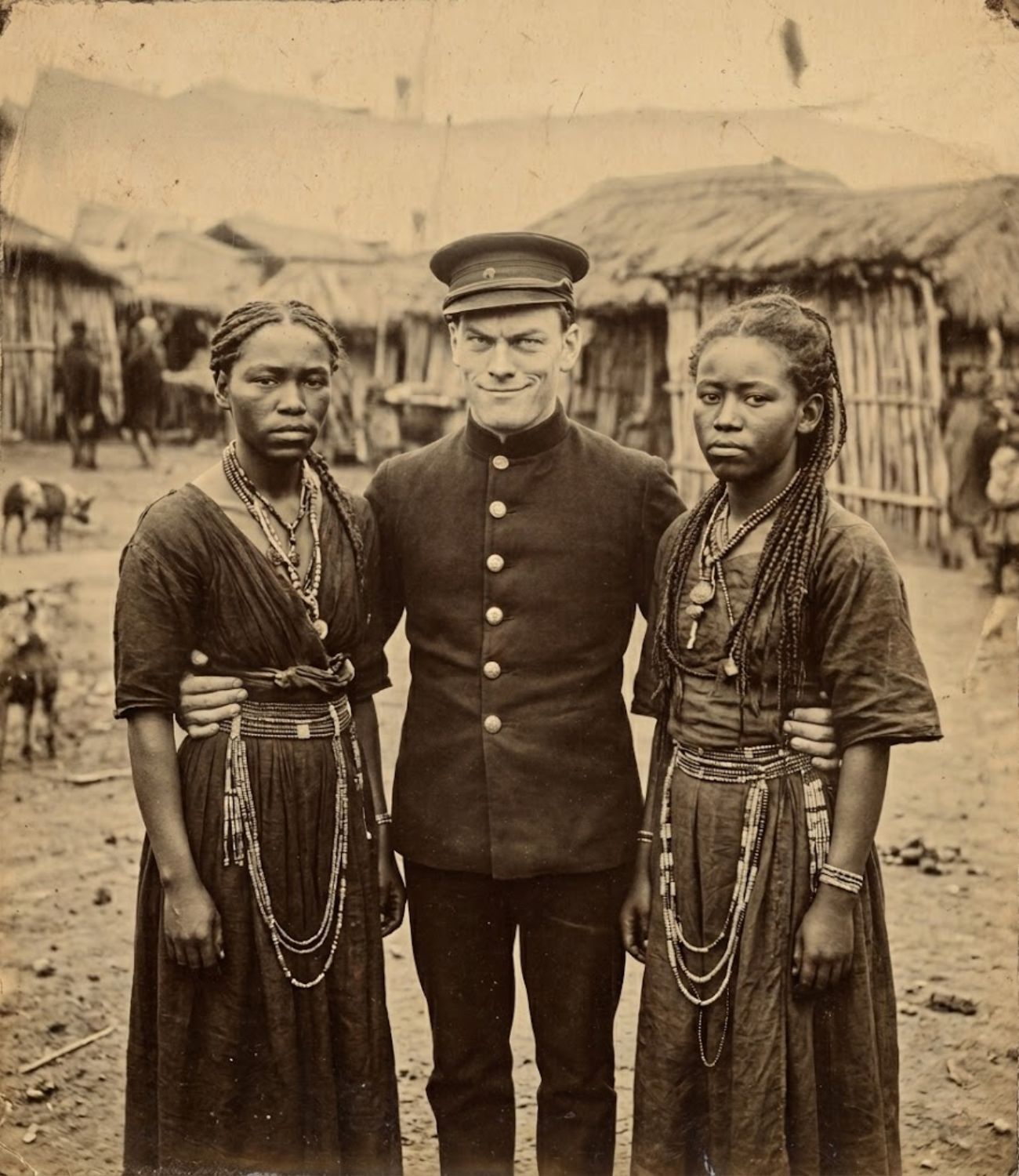
From the early 1900s, the Belgian colonial administration enforced strict racial boundaries. White colonizers—engineers, civil servants, and miners—lived in manicured European quarters like Kalina in Leopoldville (now Kinshasa), while the African population lived in underdeveloped indigenous zones. Interracial marriage was strictly prohibited, yet in practice, thousands of single Belgian men took African women as concubines.
By the 1940s, these relationships had produced an estimated 20,000 mixed-race children. These children represented a “biological crisis” for the Belgian state. Their existence proved that the invisible line of segregation was a myth. To the colonial government, these children were too “white” to be left in African villages and too “black” to be integrated into European society.
1948: The Institutionalization of Kidnapping
In 1948, the colonial government created a specialized agency: the Oeuvre de Protection des Métis (The Work for the Protection of Mixed-Race Children). Under the guise of “civilizing” and “educating” children who were supposedly abandoned by their white fathers, the agency began a systematic program of forced separation.
The Methodology of the Purge:
-
Mapping the Population: Officials compiled dossiers including names, ages, physical descriptions, and the names of the Belgian fathers (even if the fathers had never legally recognized them).
-
The “Trucks of Dust”: In 1948, the state began sending trucks into villages. Armed with lists, officials would seize children between the ages of 2 and 10.
-
Psychological Erasure: Mothers were often pushed aside or threatened when they resisted. The children were transported hundreds of miles away to state-funded Catholic orphanages.

Life Within the Orphanage Walls
Once inside the orphanages—such as those in Katanga or Save (Rwanda)—the children’s identities were systematically dismantled.
The Regimen of “Civilization”:
-
Linguistic Erasure: Children were forbidden from speaking local languages like Kikongo, Lingala, or Swahili. They were forced to speak only French.
-
Cultural Disconnection: Any mention of their mothers or their African heritage was met with corporal punishment. The Belgian nuns who managed these facilities taught the children that they were “wild” and needed to be grateful for the state’s intervention.
-
Physical Hardship: Survivors recount living in rooms with zinc roofs that turned into ovens under the equatorial sun. Discipline was enforced with rulers and sticks.
1960: The Great Abandonment
When the Congo achieved independence on June 30, 1960, the Belgian withdrawal was rapid and chaotic. While the colonizers evacuated their families, wealth, and records, the 20,000 Métis children were left behind.
Despite pleas from some officials to grant these children Belgian nationality, the state feared that bringing 20,000 mixed-race individuals to Brussels would create “racial problems” in Europe. The result was a total abandonment:
-
The Looming Chaos: As the Congolese army mutinied and civil unrest erupted, the children were left in orphanages without food, guards, or documentation.
-
Loss of Identity: Many children were too young to remember their mothers’ names or their villages of origin. Because their Belgian fathers had never signed their birth certificates, they were legally stateless. They belonged to neither the departing Belgium nor the newly born Congo.
Demographic Context and Historical Data
The scale of the Métis population and their treatment was a direct result of the demographic imbalance in the colony during the mid-20th century.
Statistics suggest that nearly 100% of children seized by the Oeuvre de Protection des Métis were separated from their mothers without the mothers’ legal consent. Furthermore, over 90% of the Belgian fathers involved never legally recognized their mixed-race offspring, leaving them without legal recourse in European courts for decades.
The Fifty-Year Silence
For decades, the story of the stolen children remained a “taboo” chapter of Belgian history. Survivors like Monique Vintubingui, Simón Galula, and Lea Tavares Mujinga lived fragmented lives. Many remained in the Congo in poverty, while some reached Belgium in the 1970s only to find they were legally “invisible” due to a lack of birth records.
It was not until the mid-2010s that survivors utilized the internet to form support groups, such as Métis de Belgique. Their collective voice forced the Belgian state to confront its past.
The Road to Legal Justice (2018–2024)
The quest for recognition moved through several historic phases:
-
2018: Prime Minister Charles Michel issued an official apology, acknowledging the “injustice” of the segregation.
-
2019: The state officially apologized for the kidnapping and the “stolen identity” of the Métis.
-
2021: Five survivors (Monique, Simón, Lea, Noelle, and María José) filed a landmark lawsuit, arguing the kidnappings constituted a Crime Against Humanity.
The 2024 Verdict: On December 2, 2024, the Brussels Court of Appeal delivered a historic sentence. The court ruled that the systematic separation of children from their mothers based solely on racial origin was a Crime Against Humanity. The court held the Belgian state responsible, noting that such crimes do not expire with time.
Conclusion: The Legacy of the Survivors
The 2024 ruling was more than a legal victory; it was a restoration of identity for thousands of people who had been “erased” by colonial policy. For the survivors, now in their 70s and 80s, the court’s acknowledgment that their childhood was stolen by a criminal state provides a final, necessary truth.
While the Belgian state was ordered to pay compensation, the survivors maintain that the true “repair” is the opening of the archives, allowing the descendants of the Métis to finally trace the names of the mothers they were forced to forget.
The history of the Métis raises a profound question about the nature of national memory: How do we ensure that the “inconvenient” parts of history are not buried under the progress of the present? Do you think financial compensation is sufficient for state-sponsored identity theft, or is a change in the educational curriculum more important?