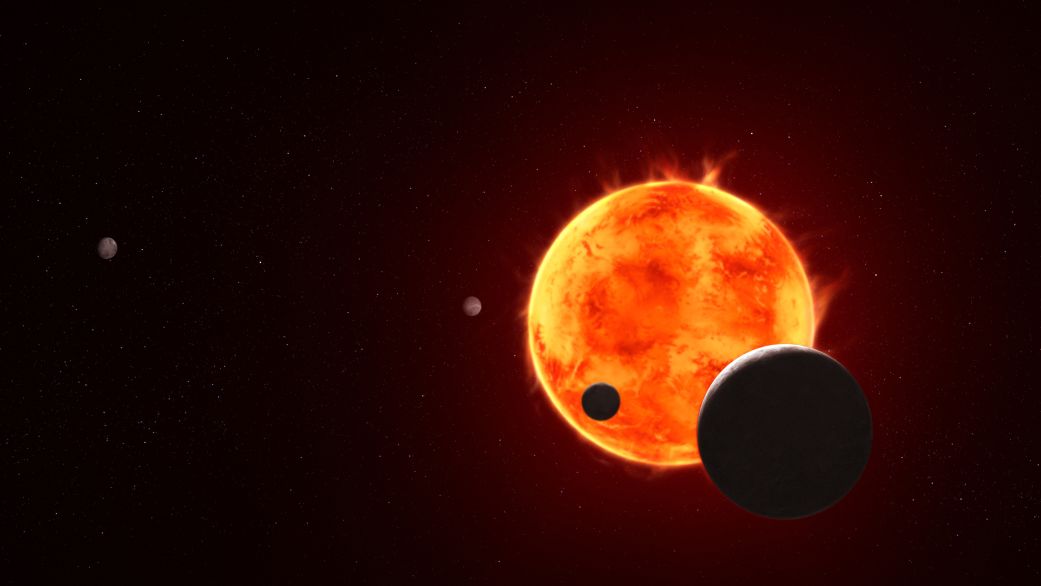
Solar system facts that everyone should know. The Solar System is our home in the universe—a vast collection of planets, moons, asteroids, comets, and countless other celestial objects orbiting a single star: the Sun. Although scientists have studied it for centuries, new discoveries continue to reveal just how dynamic and fascinating our cosmic neighborhood truly is.
From giant planets with spectacular rings to worlds that may once have supported flowing water, every corner of the Solar System has a unique story to tell. These discoveries not only help us understand our place in the universe but also provide valuable clues about how planets form and evolve.
1. The Solar System Is Enormous
One of the most surprising solar system facts is its incredible size.
Our Solar System contains:
- One star—the Sun
- Eight recognized planets
- Several dwarf planets, including Pluto
- Hundreds of known moons
- Millions of asteroids and icy objects
- Thousands of known comets
The Sun dominates the Solar System, containing about 99.8% of its total mass. Everything else—including every planet—accounts for only a tiny fraction.
Distances between planets are difficult to imagine. Earth orbits about 150 million kilometers (93 million miles) from the Sun, a distance known as 1 Astronomical Unit (AU). Neptune, the most distant major planet, orbits roughly 30 AU away, while the distant Oort Cloud may extend tens of thousands of AU from the Sun.
This enormous scale reminds us how small our planet is within the vastness of space.
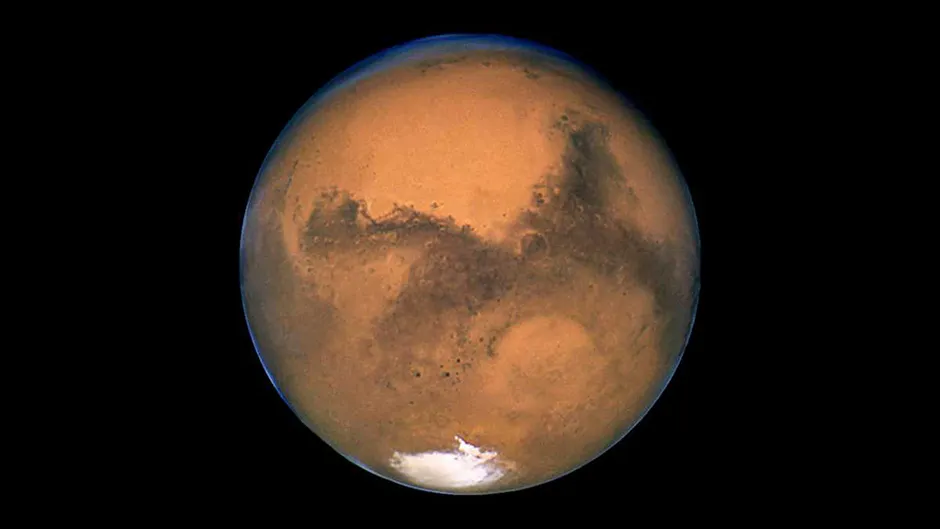
2. Mars Was Once Rich in Water
Today, Mars appears cold, dry, and dusty. However, spacecraft have revealed strong evidence that billions of years ago, the Red Planet looked very different.
Scientists have discovered:
- Ancient river valleys
- Dried lake beds
- Mineral deposits formed by water
- Polar ice caps
- Underground frozen water
These discoveries suggest that liquid water once flowed across the Martian surface for extended periods.
Researchers believe Mars lost much of its atmosphere after its magnetic field weakened billions of years ago. Without that protective shield, the solar wind gradually stripped away much of the atmosphere, making it difficult for liquid water to remain stable on the surface.
Because water is considered essential for life as we know it, Mars remains one of the most important places in the search for evidence of ancient microbial life.
3. Saturn Isn’t the Only Planet With Rings
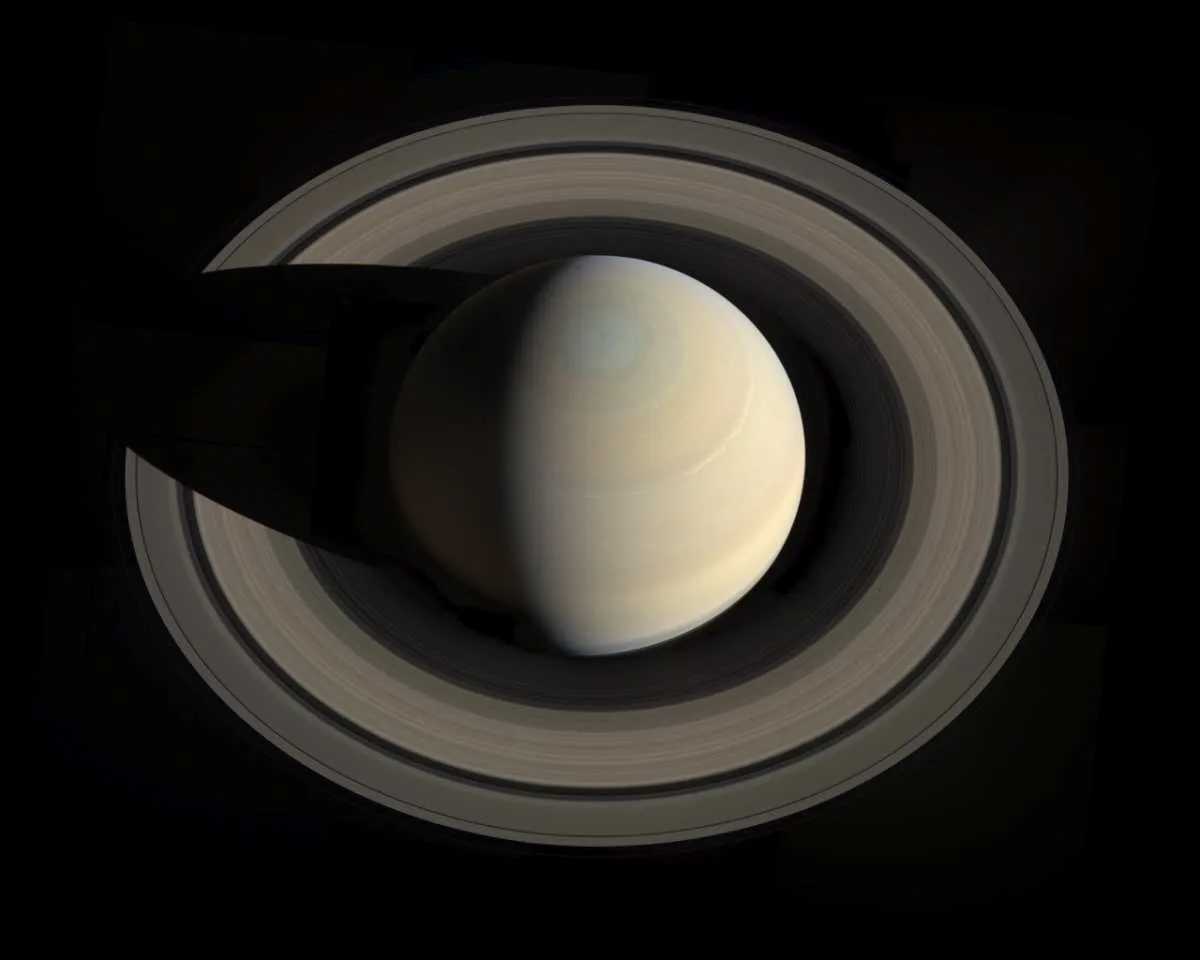
Saturn’s beautiful rings are among the most recognizable features in the Solar System, but many people are surprised to learn that it isn’t the only planet with rings.
All four giant outer planets have ring systems:
- Jupiter
- Saturn
- Uranus
- Neptune
Saturn’s rings are simply much brighter and more extensive, making them easier to observe from Earth.
These rings consist primarily of countless particles of ice, rock, and dust that range in size from tiny grains to large boulders. Scientists continue studying ring systems to better understand how they formed and how they change over time.
Even some smaller objects, such as the centaur Chariklo, have been found to possess rings, showing that these fascinating structures are more common than once believed.
4. Venus Is Hotter Than Mercury
It seems logical that Mercury, the closest planet to the Sun, would also be the hottest. Surprisingly, that title belongs to Venus.
Mercury experiences dramatic temperature swings because it has almost no atmosphere to retain heat. Daytime temperatures can become extremely hot, while nighttime temperatures drop far below freezing.
Venus, however, is surrounded by an incredibly dense atmosphere made mostly of carbon dioxide. This atmosphere creates an extreme greenhouse effect that traps heat very efficiently.
As a result:
- Average surface temperature: approximately 465°C (869°F)
- Atmospheric pressure: about 90 times greater than Earth’s
- Thick clouds of sulfuric acid surround the planet
Venus demonstrates how profoundly an atmosphere can influence a planet’s climate.
5. Uranus Rotates on Its Side
Among all the planets, Uranus has one of the strangest rotations.
While most planets spin with relatively upright axes, Uranus is tilted by about 98 degrees, meaning it essentially rolls around the Sun on its side.
This unusual orientation creates extraordinary seasons.
Each pole experiences decades of nearly continuous sunlight followed by decades of darkness as Uranus completes one orbit around the Sun every 84 Earth years.
Scientists believe this dramatic tilt may have resulted from one or more massive collisions early in the Solar System’s history.
Although NASA’s Voyager 2 spacecraft remains the only mission to have flown past Uranus, astronomers hope future missions will reveal more about this mysterious ice giant.

Why These Solar System Facts Matter
Studying our Solar System helps scientists answer some of humanity’s biggest questions:
- How did planets form?
- Why is Earth capable of supporting life?
- Could life have existed on Mars?
- How do planetary climates evolve?
- What can other planets teach us about Earth’s future?
Every spacecraft mission and astronomical observation adds another piece to this cosmic puzzle.
Final Thoughts
These five solar system facts reveal just how extraordinary our cosmic neighborhood truly is. From the immense size of the Solar System and Mars’ watery past to Saturn’s famous rings, Venus’ extreme greenhouse effect, and Uranus’ unique sideways rotation, each discovery deepens our understanding of the universe.
As new telescopes and future space missions continue exploring the planets, moons, and distant icy regions beyond Neptune, scientists are certain that many more fascinating discoveries still await. The Solar System remains one of humanity’s greatest scientific adventures—and we’ve only begun to uncover its secrets.
Sources
- BBC Science Focus Magazine. Solar System Facts: 5 Things Everyone Should Know About Our Cosmic Neighbourhood.
- NASA Solar System Exploration
- European Space Agency (ESA)
- International Astronomical Union (IAU)