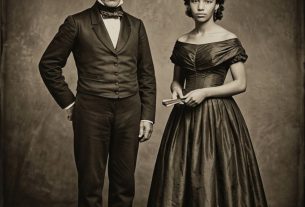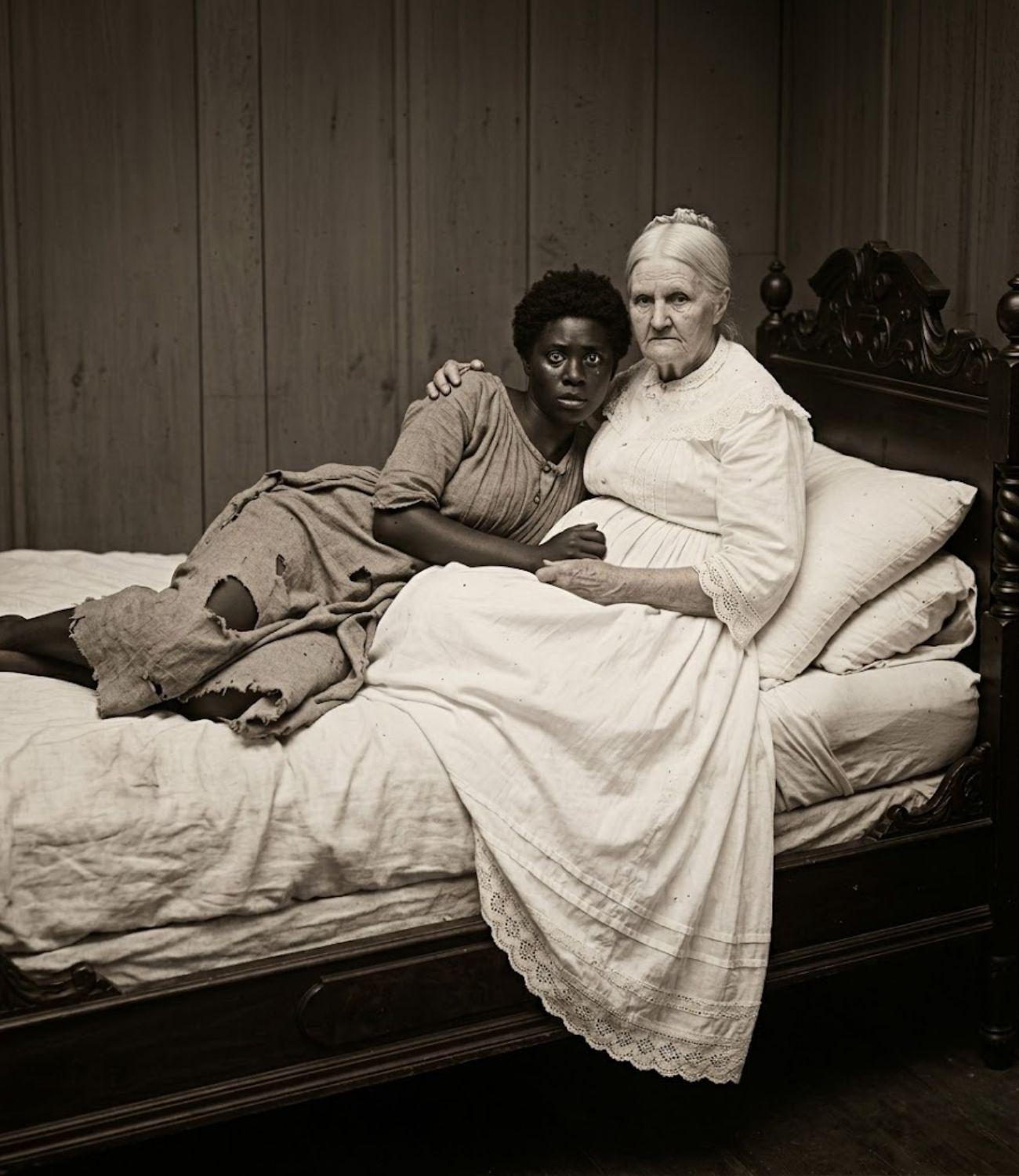
The history of Colonial Brazil is often depicted through the lens of sugar production and economic expansion, yet behind the whitewashed walls of the Casa Grande (the Big House), there existed a world of complex, often harrowing human dynamics. The story of the “Baroness of the Rising Sun” and her relationship with a young woman named Mariana offers a stark look into the power structures of 18th-century Pernambuco—a landscape where absolute authority, forbidden desires, and the hypocrisy of colonial institutions intertwined.
This narrative, set against the backdrop of a booming sugar mill (engenho), reveals how the rigid social hierarchy of the time allowed for the most profound contradictions: a place where the sweet scent of molasses often masked the bitter reality of systemic oppression.
The Shadows of the Big House: 1788
In the sweltering heat of Northeast Brazil, where the nights were filled with the relentless chorus of crickets, the social order of the Rising Sun Mill began to shift. Dona Isabel, a wealthy widow and mistress of the estate, began to demand the constant presence of Mariana, a young woman born into the mill’s enslaved population. Under the guise of seeking remedies for “widow’s melancholy”—a condition European doctors of the era often treated with various physical therapies—Dona Isabel initiated a series of nightly rituals that explored the boundaries of power and intimacy.
Mariana, though lacking formal education, possessed a sharp wit and a keen sense of self-preservation. Initially, she resisted, well-aware of the brutal reality of the senzalas (slave quarters), where stories of the pillory and public executions for disobedience were common. By 1788, however, these encounters became a nightly occurrence.
The Influence of Forbidden Luxuries
Dona Isabel’s world was one of carefully curated rebellion against the strictures of the Portuguese Inquisition. While the Church and the Crown strictly regulated the behavior of the colonists, the interior of the Casa Grande told a different story. The Baroness sought out prohibited luxuries, including lace and garments smuggled from French ships—items the Inquisition viewed as incentives to moral decay.
These nights were illuminated by tallow candles that cast flickering, dancing shadows against the walls, creating an atmosphere that felt disconnected from the world outside. Dona Isabel even began to incorporate elements of African traditions that Mariana shared in secret, mixing colonial Catholicism with spiritual practices that were strictly forbidden by the colonial authorities.

A Household Divided: Confessions and Conflict
As the relationship between the mistress and her subject deepened, the atmosphere within the plantation grew increasingly tense. The Rising Sun Mill was not just a place of industry; it was a theater of suspicion.
The Suspicious Chaplain
Father Antonio, the plantation’s chaplain and an expelled Jesuit, was among the first to notice the unusual activity within the Big House. Distrustful of the noises and the secretive nature of the nightly meetings, he attempted to use the confessional as a tool for investigation. He offered Mariana absolution in exchange for graphic details of the Baroness’s conduct, seeking to find evidence of “acts against nature” that could be reported to the higher clergy.
The Envy of the Overseer
Adding to the complexity was Manuel, the plantation’s foreman and Mariana’s biological father. His position was one of precarious authority; while he managed the labor of others, he remained a subject of the Baroness. Watching his daughter’s sudden rise to a position of perceived favor filled him with a mixture of envy and fear. To protect his own standing and distance himself from any potential fallout, he began spreading rumors among the enslaved workers, suggesting that the Baroness was practicing witchcraft—a claim that significantly increased the tension between the Casa Grande and the senzalas.
The Correspondence of Obsession: 1790
Despite the isolation of the Pernambuco countryside, Dona Isabel maintained a secret connection to the world across the Atlantic. She frequently exchanged encrypted letters with a cousin in Lisbon, Dona Catarina. These missives, carried by merchant ships, provided a detailed record of the Baroness’s obsession.
In these letters, the Baroness described her actions with unflinching detail, often asking for advice on aphrodisiacs or traditional herbal remedies found in the Brazilian interior. She believed that the renewed vigor she found in her private life was the direct cause of the mill’s success. By 1790, the production of the Rising Sun Mill had tripled. Dona Isabel took pride in this, viewing the prosperity of the sugar harvest as a justification for her personal choices, even as she continued to enforce a regime of 18-hour workdays for the laborers in the fields.
A Turn of Events
The first major shift in this power dynamic occurred when Mariana became pregnant. To protect the reputation of the house and disguise the nature of their relationship, a narrative was constructed involving a forced encounter with an enslaved man. However, Dona Isabel made a shocking declaration: she claimed the child as her own ward and potential heir. This move infuriated the distant relatives of the Menezes family, who saw their inheritance being threatened by a child they considered illegitimate.
Prosperity and Peril: The 1791 Harvest
The humid climate of Pernambuco often dictated the pace of life. Torrential rains could isolate a mill for weeks, turning the paths into impassable mud, while the scorching sun tested the endurance of those working the cane fields. Inside the Big House, the cycle of obsession continued. Mariana was increasingly isolated in the upper rooms, kept away from the prying eyes of the overseers.
In 1791, a girl was born in secret. She was fair-skinned and baptized as Isabelinha, in honor of the Baroness. Officially, she was the daughter of a runaway, but the truth was whispered throughout the plantation.
The Sweet Scent of Molasses and Blood
The year 1792 saw record-breaking harvests. Over 8,000 arrobas of sugar were exported to the markets of Lisbon and Amsterdam. To the outside world, the Rising Sun Mill was a model of colonial efficiency. The sweet smell of boiling molasses permeated the air, but it was often accompanied by the grim reality of the pillory, where daily punishments were used to maintain the “order” of the estate.
Father Antonio intensified his efforts to expose what he called “nefarious practices.” He wrote frequent letters to the Bishop of Olinda, describing the “pagan rituals” he believed were taking place. However, Dona Isabel was a master of colonial politics. She ensured the silence of local officials through generous “gifts” of refined sugar and other luxuries, effectively buying the protection of the district ombudsman.
Resistance and Revolt: 1793–1795
As the conditions on the plantation grew more oppressive, the spirit of resistance began to stir. Manuel, Mariana’s father, continued to incite unrest, hoping a revolt would clear his path to power or at least erase the “shame” he felt regarding his daughter.
In 1793, a collective escape attempt was organized. The revolt was brutally suppressed by the Baroness’s private guards. Twenty individuals were captured, and Dona Isabel ordered exemplary punishments to ensure such an act would never be repeated. The public executions and floggings in the central courtyard were a chilling reminder of the absolute power held by the masters of the land.
The Gilded Cage
Mariana, witnessing the suffering of her people, began to use her influence to plead for better conditions. Dona Isabel responded with gifts—smuggled gold jewelry and silk dresses—but the metaphorical chains remained. In a letter to Lisbon in 1794, the Baroness wrote:
“She begs for mercy for her own, but I ensure she remembers where her loyalty lies. The mill flourishes through our secrets.”
In 1795, a district captain arrived unexpectedly to investigate anonymous complaints of “moral irregularities.” Dona Isabel, ever the strategist, hosted a series of opulent banquets and dances, distracting the official until he left without filing a negative report.
The Turn of the Century: 1800–1808
By the year 1800, the Baroness’s health began to decline. Suffering from high fevers and delirium, many attributed her condition to the malaria common in the region, though some whispered of more sinister causes. During her recovery, Mariana took charge of her care, utilizing the very herbal knowledge that had once been part of their secret rituals.
Recognizing her mortality, Dona Isabel drafted a secret will. She sought to leave a significant portion of her fortune to Mariana and Isabelinha, disguised as a donation for a “faithful servant.” This document was hidden in a sealed chest, with copies sent to a notary in Recife who was known to be on the Baroness’s payroll.
The Arrival of the Court
The year 1808 brought a seismic shift to Brazil. With the Portuguese Royal Court fleeing Napoleon and arriving in Rio de Janeiro, the colony was transformed. Ports were opened to international trade, and new ideas of freedom began to filter through the social layers of the plantations.
By 1810, Mariana was 38 years old. She watched her daughter, Isabelinha, grow into an educated young woman who, due to her appearance and education, might one day pass as a free member of society. However, Isabelinha had been a silent witness to the complexities of the Big House—the nighttime cries, the hidden punishments, and the hateful looks of those who worked the fields.
The Tragic Climax: 1814
The end of the Rising Sun era began in 1814 when a formal complaint finally bypassed Dona Isabel’s network of bribes. Intercepted letters and detailed testimonies reached a new, more rigorous Bishop. An investigation was launched, and soldiers were dispatched to arrest the Baroness for “crimes against faith and public morals.”
On the night before the troops were to arrive, Dona Isabel, aged 62, took her own life. Mariana found her the next morning, dressed in her finest silk, holding an inverted crucifix—a final act of defiance against the institutions that had sought to control her.
Disappearance and Legacy
In the confusion that followed the Baroness’s death and the partial confiscation of the estate by the Church, Mariana and Isabelinha disappeared. Years later, records found in the National Archives suggested that two women matching their descriptions were seen in Recife, living as free citizens.
Reflection: The Shadow of the Colony
The case of the Rising Sun Mill reflects the stark reality of the colonial mentality—an era defined by the absolute power of masters over the bodies and souls of those they claimed to own. It reveals the deep hypocrisy of a society that condemned certain behaviors in public while allowing them to flourish in private through bribery and political influence.
The relationship between Dona Isabel and Mariana was one of profound distortion, where desire was inextricably linked to domination. It serves as a reminder of the fragility of the human condition in a system built on systemic inequality, where survival often required navigating a path through a landscape of fear, love, and violence. The silence of the Casa Grande eventually broke, but the echoes of those years remain a haunting part of Brazil’s historical narrative.