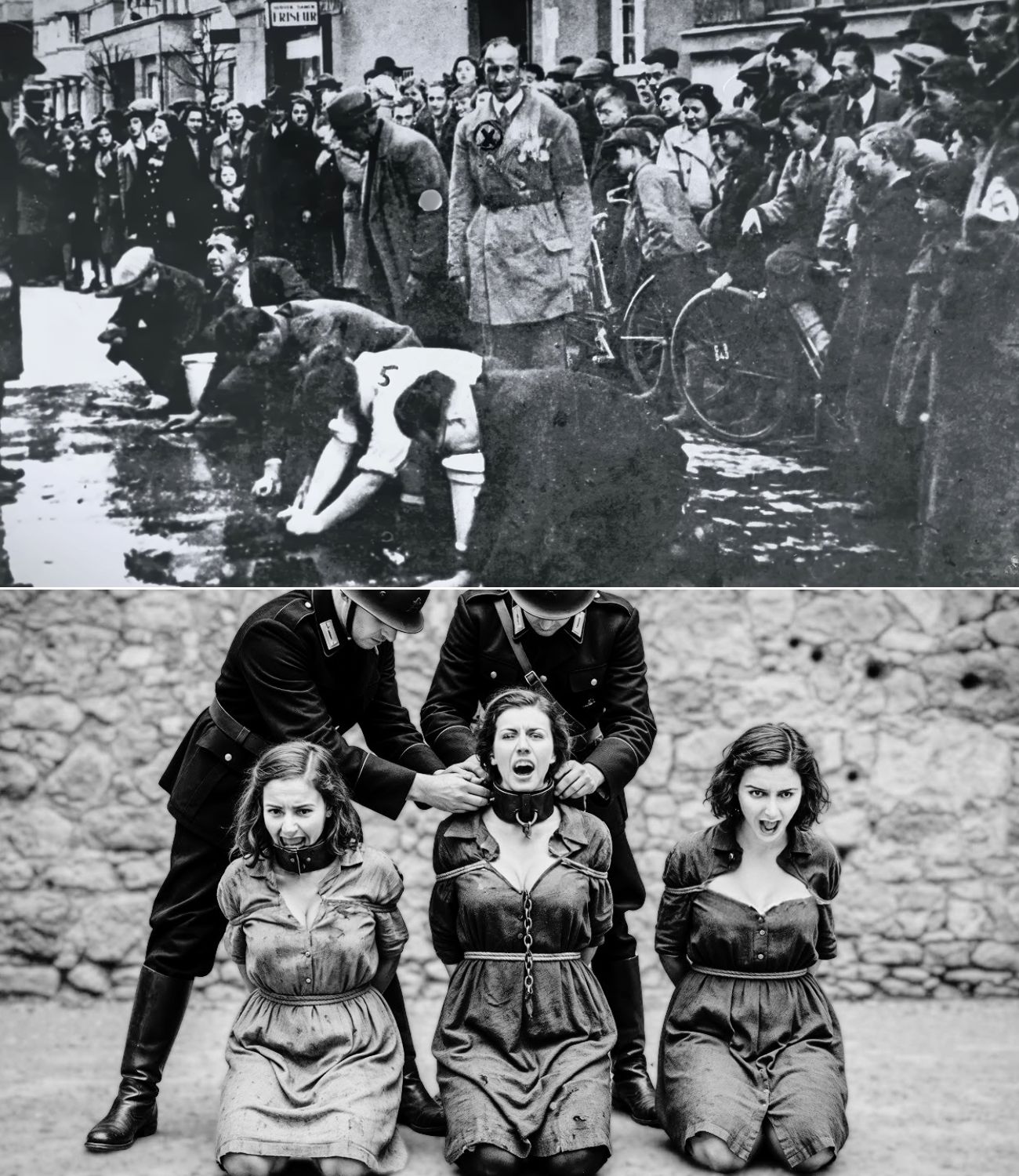
The history of the mid-20th century is often told through the lens of shifting borders and grand military strategies, but the true measure of that era lies in the individual lives caught in the machinery of state-sponsored repression. Under the regime of Benito Mussolini, the fascist vision of Italy was not merely about national identity; it was built upon the systematic silencing of any voice that dared to speak for liberty. For women, this era represented a unique and profound struggle, as the state sought to break their spirit through isolation, forced labor, and the ultimate penalty of the law.
Part I: The Architecture of Isolation
Beginning in the mid-1920s, the Italian government targeted political dissidents through a system known as Confino di Polizia. This was a structure of police confinement that allowed the state to imprison individuals without a formal trial. Authorities focused on anyone who represented a threat to the ideological purity of the state—journalists, activists, and ordinary citizens whose sentiments were deemed “anti-patriotic.“
To maximize the psychological impact of this imprisonment, Mussolini utilized remote islands and fortified towns such as Ventotene, Ustica, and Ponza. The goal was to make the prisoner feel forgotten by the world.
Life in the Confino
For women, the experience was a calculated assault on their identity. Internment was characterized by:
-
Meager Rations: Nutritional intake was kept at a level just high enough to sustain life but low enough to maintain constant physical weakness.
-
Environmental Stress: Cells were typically damp, unheated, and poorly ventilated, leading to chronic respiratory issues.
-
Censorship: Every letter was read and redacted, stripping away the emotional connection to family and the outside world.
Camilla Ravera, who served as the first female secretary of her political organization, spent years in this system. Her memoirs detail the “slow, deliberate erosion of the human spirit” that these prisons were engineered to achieve. However, even in the deepest isolation, the resolve of these women remained a point of internal resistance.

Part II: Dominance Through Compulsory Labor
As Mussolini’s influence expanded into occupied territories—including parts of Ethiopia, Albania, and Yugoslavia—the regime’s focus shifted toward the total subjugation of local populations. In these regions, the Italian military administration (referred to in archives as the Amministrazione Militare Italiana) utilized compulsory labor as a tool of both economic gain and psychological dominance.
The Mechanics of Compulsory Labor
Women in occupied zones were conscripted for exhausting physical tasks that were often public in nature to serve as a visual deterrent to others.
-
Infrastructure Projects: Digging trenches, repairing bombed roads, and transporting military supplies.
-
Agricultural Requisition: Harvesting crops under armed supervision to feed the occupying forces while their own communities faced shortages.
In Slovenia and Dalmatia, if a village was suspected of aiding local resistance movements, the authorities would resort to collective punishment. Women were often rounded up in public squares and subjected to hours of denunciations. In some instances, the state ordered the shaving of women’s heads—a symbolic act intended to strip them of their social standing and brand them as outcasts within their own communities.
Part III: The Ultimate Penalty
In the final years of the regime, as the state began to crumble under military losses and internal unrest, the measures taken against dissenters grew increasingly severe. The Tribunali Speciali per la Difesa dello Stato (Special Tribunals for the Defense of the State) were convened to pass rapid sentences on those accused of active resistance.
The Special Tribunals
The proceedings were often a formality, lasting less than an hour with pre-ordained verdicts. Women caught transporting messages, sheltering displaced persons, or distributing literature were charged with “assisting the enemy of the state,” a capital offense under wartime law.
One prominent example is the story of Irma Bandiera. Captured in August 1944, she was interrogated for several days but refused to compromise her associates. She was ultimately executed at dawn, her story becoming a rallying cry for those who remained. Similarly, members of the Gruppi di Difesa della Donna, a female-led resistance network in Friuli, faced summary judgments and were executed in the early morning hours.
The Symbolism of Dawn
Executions were often scheduled at first light, a choice intended to symbolize a “new day” for the state, cleansed of opposition. Often, families were denied the right to reclaim the bodies, as the regime sought to enforce an anonymous burial to prevent the creation of martyrs. However, this strategy backfired; these women became symbols of an enduring conscience that the state could not kill.
Part IV: Instruments of Physical Constraint
Among the various methods used to maintain discipline in internment camps and occupied regions, few were as physically and psychologically taxing as the Collare di Ferro (the iron collar). While primarily documented in military archives as a restraint for suspected fighters, it was also applied to women in partisan-heavy regions like Slovenia to break their will.
The Physiology of the Constraint
The collar was a heavy metal band locked around the neck, often fixed to a stationary post or wall.
-
Restricted Movement: The prisoner could neither lie down nor move their head without intense pain.
-
Physical Degradation: Prolonged use led to severe swelling, muscle atrophy, and permanent neck injuries.
-
Duration: Investigative archives suggest these punishments could last from several hours to multiple days, designed to exhaust the body until the mind was too tired to resist.
Military records from the Archivio Centrale dello Stato indicate that such punishments were often ordered “per ragioni di esempio”—to serve as an example. It was as much a piece of propaganda as it was a disciplinary measure.
Part V: The Legacy of Resistance
The regime’s campaign against women was an attempt to dismantle the fabric of community life by targeting its central figures. By focusing on mothers, sisters, and local leaders, the state hoped to send a message that defiance carried a cost far beyond the individual.
Yet, history shows that this pressure often forged a stronger sense of unity. The courage displayed in isolation cells, in the labor fields, and before the firing squads redefined the moral memory of the region. As Camilla Ravera famously observed, the concept of liberty is not something that can be bent, even when held in chains.
The testimony of these survivors ensures that the record of their resilience remains intact. Their letters and memoirs serve as a permanent indictment of authoritarian rule and a reminder that the human will is often at its strongest when it is most tested.
Does learning about the use of “symbolic” punishments—like the shaving of hair or the public display of prisoners—change how you view the psychological strategies of authoritarian regimes?